Richard Carrier’s article: Origen, Eusebius, and the Accidental Interpolation in Josephus, Jewish Antiquities 20.200

In December last year Richard Carrier had his article Origen, Eusebius, and the Accidental Interpolation in Josephus, Jewish Antiquities 20.200 published in the Journal of Early Christian Studies 
(vol. 20, no. 4, Winter 2012,
pp. 489–-514).

I should have commented upon it long ago. Anyway, in that article Carrier strongly arguments for the probability that the brief mention of Jesus in connection with James in Josephus’ Antiquities of the Jews (AJ) 20.200 is an accidental interpolation.

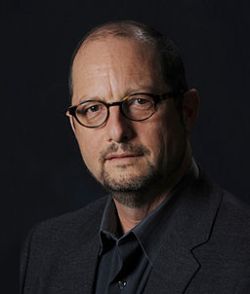
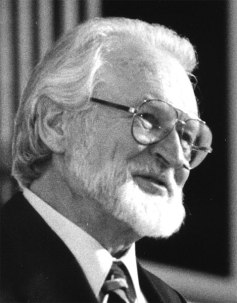
Richard Carrier

Richard Carrier, credit Wikipedia

Carrier begins by referring to the Testimonium Flavianum and says that he sides “with those scholars who conclude that the entire passage is an interpolation and that there was no mention of Jesus in the original text of AJ 18” (489). He gives two major arguments for reaching that position.

One is that the text of the Testimonium is so relatively short compared to what could be expected if Josephus really would have written about Jesus. A forger on the other hand would only have had “the remaining space available on a standard scroll” to add the additional text and would therefore “have been limited” to write only a short text. I have seen Carrier suggest this previously, but have never been convinced by it due to one specific circumstance. I have counted the words (or I guess the letters) of all the twenty books of the Antiquities of the Jews, and found that they deviated rather much in length. Book 18 is surpassed in length by very much more than the length of the Testimonium in quite number of books. So, unless I have misunderstood Carrier’s argument, there would have been plenty of room for a very much longer Testimonium if the scroll with book 18 were of the same length as some of the scrolls containing the longer books.

The other argument on the other hand, is much stronger. Carrier correctly, in my opinion, argues the following: “the paragraph that follows the TF begins with, ‘About the same time also another sad calamity put the Jews into disorder . . .’ (AJ 18.65), thereby indicating that Josephus had just ended with the sedition resulting in a public massacre described in AJ 18.60–62, and leaving no logical place for the unrelated digression on Jesus and the Christians (AJ 18.63–64).” I have made the same argument myself:

“The truly precarious in the situation is thus the first sentence of paragraph 4, which follows directly on the Testimonium. It says: “At about the same time, another [emphasis added] sad calamity put the Jews into disorder [ἐθορύβει, ethorubei]”. This means that if the Testimonium is genuine, if so only to a portion, Josephus must allude to the Testimonium when he directly after the Testimonium writes that another sad calamity put the Jews into disorder. He then had to be of the opinion that Jesus’ death was a sad calamity for the Jews – something almost unthinkable unless Josephus was a Christian, which he most likely was not.” (Part 2e of my article “The Jesus Passages in Josephus – a Case Study”, an article I intend to publish as a 200 pages pdf-file once I have updated the language and made some amendments)

But Carrier’s article is primarily not about the Testimonium, but the James passage. This he argues is an interpolation which came to be included accidentally. He further argues that “the passage was never originally about Christ or Christians. It referred not to James the brother of Jesus Christ, but probably to James the brother of the Jewish high priest Jesus ben Damneus.” (489) His way of reasoning is simplified this:

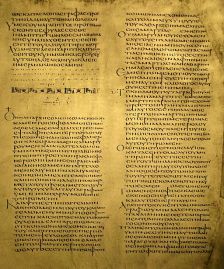
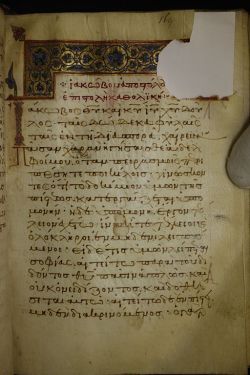
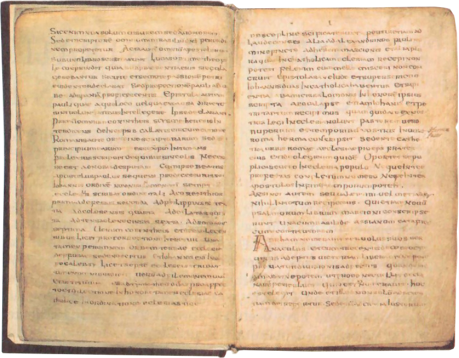
1)      Accidental interpolations happened frequently. When text by mistake was left out in the copying process, later proofreader would add the missing text either between the lines or in the margin. This text would then be inserted in the next copy of that copy. But scribes also included other text in the margins and between lines – sort of footnotes and the like. And “there was no standard notation for distinguishing marginal notes from accidentally omitted text” (490), and so marginal notes could easily be taken for being part of the original, and once it was included in the next copy the mistake would continue to be copied. Carrier writes: “A later scribe simply mistook the marginal note as accidentally omitted text and, upon creating a copy, ‘rectified’ the error by ‘reinserting’ it, thus creating an altered sentence that appears to be what its author originally wrote, but is not.” (491)

2)      Origen and Eusebius used the same manuscript or manuscript line of Josephus: “Around 231 C.E, Origen established a Christian library in Caesarea, which was passed to Pamphilus and then to Eusebius. Eusebius was thus in all likelihood using the very same manuscripts of Josephus that Origen had been using, or else copies thereof.” (492)

3)      Origen did not know the Testimonium: “In fact, the TF in that precise form was almost certainly not known to Origen, as there are several passages where it is almost certain he would have remarked upon it, even quoted it, had he known of it.” (492) Carrier, again correctly in my opinion, rejects all subjective reconstructions of alternative versions of the Testimonium, and also cautions us to trust the accuracy of so-called quotations. Like me, he thinks Alice Whealey is wrong when she claims that Eusebius originally wrote “He was thought to be the Messiah” in his quotation of the Testimonium. I am pleased to see that Carrier argues in the same way as I do regarding the small deviations of the Testimonium, especially in the translations: “More likely some early copy of Eusebius’s History alone was ‘improved’ by a scribe intending to restore a more plausible quotation from a Jew … and it is this that we see in Whealey’s cited examples. It is inherently less likely that all manuscript traditions of all the texts of Eusebius and all manuscript traditions of Josephus were conspiratorially emended in the same way, than only one manuscript tradition of a single text of Eusebius being emended the other way” (494).

4)      Since the Testimonium was not in Origen’s copy of AJ, but in Eusebius’, the latter must have used a copy of Origen’s copy from the same library and into which the Testimonium had been added. Carrier does accordingly not think that Eusebius invented the Testimonium himself. Although I would not bet on it, someone must have written the Testimonium if it was inserted into AJ, and Eusebius is then an obvious candidate. At least we can agree on that it was probably not yet invented by the time of Origen in the 240’s.

5)      The manuscript used by Eusebius would then have included marginal notes made into Origen’s manuscript (from which it would have been copied) and in all likelihood it also included Origen’s own notes.

6)      Carrier assumes that Josephus wrote “the brother of Jesus, the name for whom was James, and some others . . . ,” and that “the one called Christ” was added while perhaps at the same time “ben Damneus” was removed. He gives five reasons for assuming this (by me enumerated as a–e). a) If someone would make a note to remind himself of the place where he thought Josephus mentioned Jesus, “the one called Christ” is just what one could expect to be written. b) A participial clause such as this one is typical for interlinear notes. c) The phrase is practically identical to Matt 1.16 and something Josephus hardly would have written. d) In context, it seems odd to imagine that the executions would be executions of Christians, not least because many influential Jews are said to be very upset. e) The way in which this James is said to be killed diverges considerable from how it is described in Christian sources. I agree on all five issues, although point b seems a bit weaker than the rest.

7)      Carrier assumes that the wording ὃς … ἀδελφὸς Ἰησοῦ τοῦ λεγομένου Χριστοῦ, “the brother of Jesus who was called Christ”, stems from Origen expression (but not from empty nothingness) and not from Josephus. If “who was called Christ,” is removed, all that Josephus in AJ 20.200 and Origen share in common is the name James and the expression “brother of Jesus”. But they primarily differ in Origen linking James to the fall of Jerusalem, calling him Just and having the Jews wishing to have him killed (500).

8)      When Eusebius quotes the same passage in Josephus as Origen refers to, he is obviously not quoting Josephus but Origen. This can be seen from the fact that the quotation is basically identical to Origen’s wordings, that nor Eusebius knows where Josephus should have written it (Origen never said this) and that Eusebius is quoting the passage whereas Origen most certainly is not. Still the wording is identical. After this Eusebius also quotes the James passage which Origen never referred to and which obviously has entered into Josephus’ AJ after the time of Origen.

9)      If Josephus would have written about Jesus Christ of the Bible and he also had written the Testimonium, he would have provided a cross-reference and also explained what the name meant. Instead it is more likely that Josefus was referring to another Jesus, the one who became high priest after Ananus in 62 C.E. and whom Josefus mentions directly afterwards (503). According to Carrier (and I agree once more) the only intelligible reading of the story is that Ananus had James the brother of Jesus falsely accused and executed, and was punished for this by being disposed as High Priest and that James’ brother Jesus, son of Damneus, was appointed new High Priest: “In effect, Josephus was saying, ‘Ananus illegally executed the brother of Jesus, which got a reaction; for his crime, he was deposed and replaced by Jesus.’” (504) This Carrier, once again correctly, says is supported by the fact that the execution of Josephus’ James in no way, except for the stoning, corresponds to the Christian accounts of James’ death.

10)  Carrier suggests that Origen’s source for the James story was not Josephus, but the Christian hagiographer Hegesippus. This Hegesippus calls the Christian James “the Just”, and says that the fall of Jerusalem was the result of the execution of James (508). As the names Hegesippus and Josephus often were confused and Origen obviously refers to the same things as said by Hegesippus, Christian conceptions not shared by Josephus, the obvious interpretation, according to Carrier, is that Origen mistook a work by Hegesippus for being written by Josephus. (509-10)

To summarize, this is what Carrier suggests. In the 240’s Origen writes that “Titus destroyed Jerusalem, on account, as Josephus wrote, of James the Just, the brother of Jesus who was called Christ”. Although Origen says that Josephus wrote this, Origen nevertheless got it from Hegesippus, from whom he paraphrases it, not quotes it. He also includes a passage from Matt 1.16, and this he does in his Commentary on Matthew.

Origen searches Josephus in order to find where Josephus had written this, but does not manage to find the passage. He only finds the story of the stoning of one James in AJ 20.200 which spoke of “the brother of Jesus, whose name was James”. Perhaps he made a note there: “the one called Christ”. If Origen did not make such a note, then someone else later on made it, adapting to the phrase Origen previously used.

Eusebius used the same library as Origen less than a century later, and probably had a copy of AJ which was made from the very manuscript used by Origen. In the copying of that manuscript, the marginal note would have been inserted into the text so that it now read “the brother of Jesus who was called Christ, the name for whom was James …”. Eusebius, apart from this, also quoted the passage given by Origen as if it had been written by Josephus. But since he only got it from Origen, neither he could say where Josephus had written this.

As AJ later was copied, it was the expanded version used by Eusebius that became the standard version from which all later copies were made.

Most of this has already been dealt with at length, also by me. The “new” things are that this is published in a peer reviewed article (which seems to be so important for so many), and the idea of the manuscript line leading directly from Origen to Eusebius. Also this is known facts, but Carrier has refined and isolated the train of thought, even leaving out many alternative scenarios as being less likely. Although I share Carrier’s opinion that also the mention of Jesus Christ in AJ 20.200 is a later addition to the text, I am not as convinced as he seems to be, that this was done as described above. It is for sure a convincing line of argument that Carrier presents, still there are a number of other possibilities which – at least combined – seem to be as likely. The least likely scenario though is that Josephus would have written it.

Roger Viklund, 2013-04-02

Färst äkthetsförespråkare bland bibeltrogna

Som vanligt när nya upptäckter görs inom Bibelns område väcker de intresse och uppmärksamhet. Forskningsområdets karaktär gör att dessa fynd som regel också går att ifrågasätta vad gäller såväl äkthet som betydelse. När nu ett litet fragment som tillsynes säger att Jesus och Maria Magdalena var gifta med varandra påträffas, uppkommer givetvis frågan om det är äkta eller ej. I detta inlägg ska jag endast i mindre omfattning ta upp den frågan, då jag i nuläget saknar tillräcklig information för att kunna göra en trovärdig bedömning av äktheten. Däremot är det intressant att studera vilka positioner som olika företrädare intar.

Jag tycker mig märka en tendens där man positionerar sig längs en skala beroende på vilket förhållande man har till den kristna läran. Det kan närmast beskrivas som en sats eller kanske ”lag” som kan formuleras på följande vis: Ju mer ett fynd, en teori, överensstämmer med ens egen uppfattning, föreställning och önskan, desto troligare är att man också anser fyndet vara äkta eller teorin vara sann. Och givetvis fungerar detta också omvänt så att ju mindre fyndet, teorin överensstämmer med ens egna föreställningar, desto sannolikare att man anser fyndet vara förfalskat eller teorin vara oriktig.

Detta borde leda till ett antal insikter, nämligen …

1)      att de föreställningar man gör sig, kanske i högre grad än man vill tillstå är följden av andra föreställningar som man hyser;

2)      vad en viss forskare eller en viss forskarmajoritet hyser för uppfattning är av liten eller ingen vikt, såvida denna uppfattning inte kan styrkas genom solida fakta och argument;

3)      även då sådana fakta och argument i hög omfattning föreligger, bör man fråga sig i vilken mån dessa råkar visa i en riktning som denna forskare eller denna forskarmajoritet av olika anledningar önskar ska vara sant.

Fragmentet medför, eller i varje fall skulle kunna medföra, en förändrad uppfattning om Jesus och den tidiga kristendomens uppkomst. Bland de som önskar sådana förändringar och som därför heller inte är alltför bokstavligt bibeltroende, välkomnas ofta fynd av detta slag och kanske hoppas man därför att det ska visa sig vara äkta. Därigenom tenderar man lättare att finna argument till stöd för att fragmentet också är äkta. Och ju mer bibeltrogen (eller kanske bokstavstrogen) man är, desto mindre förtjust synes man vara över detta fynd och kanske hoppas man därför att det ska visa sig vara förfalskat. Därigenom tenderar man lättare att finna argument till stöd för att fragmentet också är förfalskat. Mycket grovt uppskattat (och givetvis med allehanda undantag) kan man nog säga att det finns färst äkthetsförespråkare bland de som är mest bibeltrogna och då flest bland de som är litet eller inget bibeltrogna eller bokstavstroende. Självfallet fungerar detta på likartat sätt när ett fynd som sägs utgöra Jesu svepning kommer på tal, där väl nästan enbart kristna tror att Turinsvepningen är äkta.

Det lustiga (eller olustiga?) med denna iakttagelse är att det verkar gälla högt aktade forskare i ungefär samma utsträckning som det gäller vanliga lekmän. Jag avser här inte att räkna upp namn. För övrigt är detta också bara min egen högst ovetenskapliga uppfattning och det är svårt att göra en sådan uppdelning då det inte går att säkert avgöra hur övertygade olika personer är om föremålets äkthet, ej heller hur bibeltrogna de är. Skillnaden i position mellan profana respektive kristna forskare/professorer å den ena sidan och den ateistiska/agnostiska/religiösa (och andra) allmänheten å den andra sidan, ligger främst i att de förstnämnda genom sin skolning och sin position oftast uttrycker sig mer försiktigt med tillbörliga reservationer, medan de sistnämnda i högre grad är mer kategoriska.

Däremot verkar de inte förhålla sig mer objektivt. Argumenten som framförs kan vara av högst varierande slag inom båda grupperna. Men fastän forskare är mer försiktiga kommer de likväl till likartade slutsatser i förhållande till sin personliga tro som allmänheten gör – om än med stöd av skilda argument. Jag kan inte på något vis själv svära mig fri från detta, utan bara konstatera att trots att de flesta tycks anse att de arbetar objektivt lyckas de likväl som regel hitta argument till stöd för uppfattningar som stämmer med vad de redan innan trodde.

I en kommentar till mitt föregående inlägg Jesus’ hustru Maria Magdalena? hänvisar signaturen bbnews till en artikel Vatican researchers conclude “Jesus’ wife” papyrus fragment is fake. Denna artikel där Vatikanen tydligen anser att fragmentet är en förfalskning (som då ger stöd för min indelning) hänvisar i sin tur till en artikel av Francis Watson, The Gospel of Jesus’ Wife: How a fake Gospel-Fragment was composed. Där argumenterar Watson för att fragment ”sannolikt” är en förfalskning; då att någon sammanställt texten ur Thomasevangeliet, främst från verserna 101 och 114. På ett likartat sätt argumenterade han också för att Hemliga Markusevangeliet är en förfalskning genom att någon ”klippt och klistrat” ur de övriga evangelierna (se mitt bemötande av Watson: The pastiche forgery of Secret Mark, as presented by Francis Watson) och han passar på att även i denna artikel hänvisa till Hemliga Markusevangeliet som en modern parallell på en förfalskning.

Det finns dock flera problem med Watsons teknik. Antalet ord som förekommer i fragmentet är först och främst få. De flesta är dessutom vanliga ord och de enda riktigt ovanliga, nämligen ”hustru” och ”svullna” saknar paralleller. Alltså, det som är verkligen utmärkande uppvisar inga paralleller. Watsons metod är dessutom selektiv eftersom den utgår från att det är en förfalskning och han därför söker efter stöd för just detta. Allt detta har min vän Timo Paananen påtalat i en utmärkt liten artikel, Another “Fake” Or Just a Problem of Method: What Francis Watson’s Analysis Does to Papyrus Köln 255? där Paananen undersökt ett garanterat äkta textfragment, Papyrus Köln 255, och med samma metod som Watson använde påvisat att också det måste vara en förfalskning eftersom paralleller från Johannesevangeliet står att finna på motsvarande sätt. Paananen säger att Watsons teknik kan beskrivas på följande sätt:

1)      Om fragmentet är en förfalskning borde förfalskaren ha sammanställt texten genom att hämta bitar ur olika äkta texter.

2)      Och om så är fallet borde de textställen förfalskaren använt gå att finna.

3)      Det går faktiskt att finna sådana textställen.

4)      Därigenom är fragmentet en sammanställning gjord ur andra texter.

5)      Därmed är det också en förfalskning.

Tekniken är snarlik den som Stephen Carlson använde i The Gospel Hoax. Paananen visar alltså hur lätt det är med denna teknik att påvisa att garanterat äkta texter är förfalskade. Därmed blir metoden också verkningslös. Frågan om huruvida fragmentet är äkta eller ej kommer förhoppningsvis att kunna avgöras, emedan vi i detta fall (i motsats till Hemliga Markus) har tillgång till det för analyser. Sådana verkar redan ha påbörjats. Så här skriver Karen King angående test av bläcket:

“We are also pursuing chemical testing of the ink. The owner has agreed that the fragment itself will remain at Harvard University for the time being, where it will be accessible to accredited scholars.”

“We are currently in the process of seeking to have the chemical composition of the ink tested by non-destructive methods. While this analysis will not yield a specific date, it can indicate whether the composition of the ink corresponds to comparable inks used in antiquity. “

Vad gäller äktheten anser hon att det skulle vara mycket svårt att förfalska det sätt på vilket bläcket har bleknat och spridit sig, något som tyder på hög ålder:

“On the other hand, there are a number of other facts that point toward authenticity. Most notably, it would be extremely difficult to forge the way the ink has been preserved on the writing material. As mentioned above, the ink on the verso has faded badly, an unfortunate characteristic shared with many ancient papyri, but an indicator of a long aging process.”

Vad jag har förstått så verkar den anonyme ägaren av denna papyrusbit ha mer av samma sort tillhörande samma koptiska skrift, och att om den efter den forensiska analysen visar sig vara äkta kommer även resten att bli tillgängligt (för den som kan betala tillräckligt – gissar jag).

Roger Viklund, 2012-09-28

Jesus’ hustru Maria Magdalena?

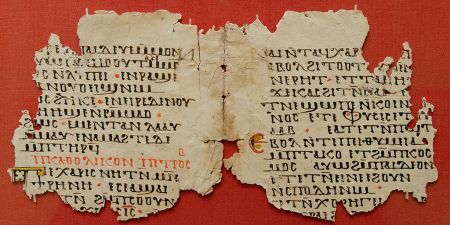
Ett nytt textfragment på koptiska har sett dagens ljus. Se exempelvis New York Times eller Aftonbladet. I detta verkar det tydligt framgå att en kvinna, sannolikt Maria Magdalena, av Jesus tilltalas som hustru.  Det är Karen Leigh King, expert på gnosticism och den tidiga kristendomen, som låter meddela att hon kommit i besittning av en tidigare okänd text bestående av åtta ofullständiga rader på framsidan och sex ännu mer ofullständiga på baksidan av ett litet papyrusfragment. Dess storlek är blott ca 8 x 4 cm. Framsidan finns återgiven här inunder.

Jag har låtit skapa en bild av den transkription av texten (på de båda sidorna av fragmentet) som Karen King tillsammans med AnneMarie Luijendijk publicerar i “Jesus said to them, ‘My wife…’” A New Coptic Gospel Papyrus (kommande i Harvard Theological Review 106:1, January 2013)

I min översättning från den engelska översättning dessa båda presenterar skulle texten lyda:

FRAMSIDAN

1 ] “… inte [till] mig.  Min moder gav mig li[vet]…”

2 ] Lärjungarna sade till Jesus, “.[

3 ] neka.  Maria är [ev.: inte] värdig detta

4 ] …” Jesus sade till dem, [ev.: hon är] ”min hustru . .[

5 ] … hon kommer att kunna bli min lärjunge . . [

6 ] Låt onda människor svullna upp … [

7] Vad gäller mig, vistas jag med henne för att kunna … [

8] en bild [

BAKSIDAN

1 ] min mod[er

2 ] tre [

3 ] … [

4 ] fram med … [

Vad gäller äktheten vet jag inte mer än att det i första skedet verkar som om mycket talar för att fragmentet är äkta. Dock har vissa tvivel på dess äkthet väckts, då främst har lingvistiska invändningar gjorts (Se exempelvis Washington Post).

För närvarande tillhör fragmentet en privat samlare som önskar förbli anonym.

Fragmentet anses komma från en codex och denna dateras paleografiskt till 300-talet vt. Den anses ha sitt ursprung i Egypten.

Författarna daterar originalet (som kan eller kanske bör ha varit på grekiska) till troligen andra halvan av hundratalet (hur de nu kan göra det?).

Om nu detta fragment är äkta säger alltså texten att Jesus själv säger att Maria (med all sannolikhet Maria Magdalena även om bara Maria nämns) är hans hustru. Det koptiska ordet är här ett annat än i Filipposevangeliet (se: Kysste Jesus sin hustru Maria Magdalena på munnen?). Koptiskan tahime (jag kan inte återge de koptiska bokstäverna på bloggen utan måste transkribera ordet) betyder ”min hustru” även om det också kan betyda ”min kvinna” – men i så fall tydligen med ungefär samma innebörd. Artikelförfattarna skriver:

The meaning of tahime [my transcription of the Coptic word] as “my wife” is unequivocal; the word can have only this meaning. Given that Jesus is the speaker, the possessive article indicates that he is speaking of his wife.

Så om nu denna text verkligen är äkta och den tolkning av texten som här ges också visar sig vara riktig, utgör detta ett starkt stöd för att Maria Magdalena också i Filipposevangeliet och i Maria Magdalenas evangelium beskrivs som hustru till Jesus och inte bara som hans följeslagare.

Vad som är historisk sanning är däremot en helt annan fråga. Detta fragment visar egentligen endast (i bästa fall) att det redan tidigt fanns föreställningar om att Jesus och Maria var man och hustru.

Roger Viklund. 2012-09-19

The Literary Relationship of the Raising of Lazarus story to The Secret Gospel of Mark Excerpts quoted in the Mar Saba Letter of Clement, and Miraculous Healing Stories in the Synoptic Gospels

This is a Guest post by David Blocker on Literary Relationship between the Lazarus story in GJohn and Secret Mark and Healing Stories in the Synoptic Gospels. The enclosed table is made as an A0 Oversize PDF of more than one square meter in size. It accordingly needs to be magnified on the screen.

Parallel Passages in the Gospels of SecretMark_John_Mark_Luke and Matthew

Two previous posts on this blog have demonstrated parallels between the “Secret Gospel of Mark” excerpt contained in “Clement’s Letter to Theodore” and canonical and non canonical gospel texts:

Overlaps between Secret Mark, the Raising of Lazarus in John, and the Gerasene Swine episode in Mark

A Fourteenth Century Text in which Jesus Taught the Kingdom of God During the Night at Bethany: Does It Demonstrate That Secret Mark Is an Ancient Text, and Not a Modern Forgery? (as a PDF file here)

This essay discusses the attached table which demonstrates additional parallels between the “Secret Gospel of Mark” and the canonical “Gospel of Mark” and its synoptic counterparts in Luke and Matthew.  These parallel texts appear to be derived from the story of the “Raising of Lazarus”.

The texts have been arranged in parallel columns.  Text parallels appearing in the same row have generally been color coded or given a special font attribute for emphasis.  Text segments that are out of sequence or have been duplicated are enclosed by parenthesizes.

The parallel texts include the “The Raising of Lazarus” (John 11),  “The Long Excerpt from the Secret Gospel of Mark”, “The Demoniac and the Gadarene Swine” (Mark 5 and synoptic parallels), Healing the Blind (Mark 10 and parallels), “The Epileptic Boy Healed” (Mark 9 and parallels, including Shem Tob Hebrew Matthew 17), “Jesus and the sons of Zebedee” (Mark 10 and parallels), the “Naked Youth in the Garden of Gethsemane” (Mark 14) and “Jesus visits Mary and Martha” (Luke 10).  The interrelationships between these texts and the “Anointing of Jesus” (John 12, Mark 14, and Matthew 26) are also demonstrated.  The dependency of Luke 10 on both the “Raising of Lazarus” and the “Anointing of Jesus” is shown.

As previously noted the long excerpt from Secret Mark contains the phrase “Mystery of the Kingdom of God” which has its counterpart only in “Shem Tob Hebrew Matthew”.  It is unlikely that Morton Smith had been acquainted with this text (see A Fourteenth Century Text in which Jesus Taught the Kingdom of God During the Night at Bethany).  If Morton Smith had forged “Secret Mark”, he would have had to have known of at least some of the links to the other texts included in the accompanying table.  Rather than attempting to make his reputation based on the putative discovery of the “Secret Mark” letter, Morton Smith could have made his reputation by publishing his discovery of the linked texts, a significant accomplishment in itself.

The fact is that during his lifetime, even though he wrote extensively about “Secret Mark”, Morton Smith never recognized that it was related to a multiplicity of other texts.  This oversight would have been unlikely had he been the creator of “Secret Mark”.

The fact that multiple miracle stories within the “Gospel of Mark” are related to a single story in the “Gospel of John” means that the order in which the canonical gospels were written must be reconsidered, as well as how solutions to the synoptic problem are formulated.

The Markan miracle stories listed in the accompanying table are based on incompletely overlapping excerpts from the “Raising of Lazarus” (John 11) and its sequel the “Anointing at Bethany” (John 12).  This suggests that the stories from the “Gospel of Mark” are based on the Lazarus story or a precursor of the Lazarus story.  The converse, that the narrative in John was created from an assemblage of several similarly constructed but seemingly independent stories from the “Gospel of Mark” is unlikely.  This leads to the conclusion that there is at least one extended narrative sequence in the “Gospel of John”: (John 11-12) that predates the composition of the “Gospel of Mark”.

The Markan story that is most closely related to the Bethany narratives in the “Gospel of John” is the excerpts from the “Secret Gospel of Mark”.  Next in line, the “The Epileptic Boy Healed” seems to have the greatest narrative similarity to the Bethany narratives in the “Gospel of John”.

However, in spite of the dissimilarity of the stories, it is the canonical Mark story of the “Demoniac and the Gerascene Swine” that has the greatest phrase by phrase overlap with the text of the “Raising of Lazarus”.  The motivation of the author of the “Gospel of Mark” for creating such a lengthy and carefully constructed caricature of the Bethany narratives within his own text is now unknown.  He must have had some now indiscernible reason to lampoon or conceal the “Raising of Lazarus” story and to disconnect it from the “Anointing of Jesus” story.  The author of the “Gospel of Luke” also almost completely expunged all recognizable traces of the Bethany narratives from his text.  Again this suggests that there was something about the Bethany stories that the synoptic Gospel authors thought best to conceal.

“The Naked Youth in the Garden of Gethsemane” (Mark 14) appears to have a tenuous relationship to the “Secret Gospel of Mark”.  One possible hypothesis is that Mark 14.50-52 is a fragment of the “corrupt and unspeakable” Carpocratian version of the “Gospel of Mark” referred to by Clement in his letter to Theodore.

The stories of healing the blind man/men (Mark 10.46-52, Mt 9.27-31, Mt 20.29-34, and Luke 18.35-43) are parallel to the story of Jesus and the sons of Zebedee.  In the “Gospel of Matthew” the story is doubled, with the second version about two blind men.  This increased its similarity to the story about the two Zebedees asking Jesus for more power and influence.  The author of the “Gospel of Matthew” appears to be making a specific literary reference to his disapproval of the Zebedees by likening them to two blind men.

A hypothesis that I plan to explore in greater detail is that a miraculous healing was actually a metaphor for the successful recruitment of an individual or group to the Jesus sect.

The two passages quoted below from the “Gospel of Mark” equate “sickness” with “sin” or unacceptable behavior.  In this case the sinners are tax collectors (Mark 2:15) and presumably other collaborators with the Roman occupation of Judea (See Luke 3:10-14 where John admonishes the well off, tax collectors (publicans) and soldiers (mercenaries drawing wages from the Romans)).

Mark 2:5: And when Jesus saw their faith, he said to the paralytic, ”My son, your sins are forgiven.

Mark 2:17: And when Jesus heard it, he said to them, ”Those who are well have no need of a physician, but those who are sick; I came not to call the righteous, but sinners.”

When the “sinner” rejects his prior way of life and converts to the mind set promulgated by Jesus he is forgiven, and “cured” of his metaphorical diseases.

This essay only touches upon analyzing the relationships between the texts in the comparison table which are based on the Raising of Lazarus story.  The table suggests that there is a recursive or repetitive structure within the “Gospel of Mark”.  Variations of the same story are used over and over to create a set of seemingly independent miracle stories. These stories were assembled into a longer narrative consisting of cycles made up of the variations of the source story.

This is not the only example of creative recycling of a narrative in the “Gospel of Mark”.  The “Miracle of the Feeding the Multitude” is another example of a story found in the “Gospel of John” (John 6:1-4) that was presented in two different forms in the “Gospel of Mark”: (Mark 6:30-44 and Mark 8:1-9).  “The miraculous catch of fish” (Mark 1:16-20) may also belong to this set of stories and be related to the source of the fish in the very earliest version of the narrative.  “Calming the Storm” (Mark 4:35-41) and “Walking on Water” (Mark 6:45-52) is another example of a pair of Markan variations of a story found in the “Gospel of John” (John 6:16-21).

At least superficially, the narrative of the “Gospel of Mark” consists of a series of story cycles centered about miraculous healings or feedings.  These stories are literary variations of narratives found in the “Gospel of John”.  In some cases the stories have been altered almost beyond recognition and only through careful analysis can their common origin be recognized.  In many cases the story cycles seem to be framed by Jesus being followed by crowds and arriving or departing by boat.  The multiplication of stories found in the “Gospel of John”, within the text of the “Gospel of Mark”, suggest that the Johannine narratives predate the “Gospel of Mark”.

The fact that the “Secret Gospel of Mark” narrative belongs to this cluster of stories is consistent with it being an original Markan narrative rather than a modern forgery.

David Blocker
2012/08/26

Var Kefas och Petrus en eller två individer?

UPPDATERAT 2012-08-07

I ”Did Jesus Exist” skriver Bart D. Ehrman följande:

“Cephas was, of course, Simon Peter (see John 1:42), Jesus’s closest disciple.”

Ehrman berättar i fotnot 1 till kapitel 5 …

“Earlier in my career I played with the idea that Cephas and Peter were two different persons, but now I think that’s a bit bizarre—as most of the critics of the idea have pointed out! The most compelling reason for identifying them as the same person is not simply John 1:42 but the historical fact that neither Cephas nor Peter was a personal name in the ancient world. Peter is the Greek word for “rock,” which in Aramaic was Cephas. And so Jesus gave this person—his real name was Simon—a nickname, “the Rock.” It seems highly unlikely that two different persons were given precisely the same nickname at the same time in history when this name did not previously exist.”

Det Ehrman avser med att han tidigare föreställde sig att Kefas och Petrus var två individer, är att han skrev en artikel (Cephas and Peter, Journal of Biblical Literature 109:3 [1990], 463-74) där han argumenterade för just den ståndpunkten. Nu har han uppenbarligen bytt uppfattning och anser sin tidigare ståndpunkt vara ”en aning bisarr” eftersom Kefas och Petrus båda betyder klippa (vilket inte är riktigt sant vad gäller Petrus) och att inget av de båda namnen förekommer förrän efter namnen etablerats genom kristendomen (vilket inte är sant).

Det är inte sant att Petrus skulle vara ett namn som inga judar bar i nollhundratalets Palestina – så vi lämnar Ehrman för denna gång och vänder oss i stället till fakta och den efterlämnade informationen för att skaffa oss en bättre föreställning av källäget.

Chrys C. Caragounis skriver följande:

”When it is claimed that Πέτρος and Kephas are not attested as proper names before New Testament times, the claim is, as far as the Aramaic goes, inaccurate and as far as the Greek is concerned, misleading.” (C. C. Caragounis, Peter and the Rock, s. 17)

Genom i stort sett hela den kristna historien har det förutsatts att Kefas och Petrus är samma individ. Detta grundar sig framför allt på Johannesevangeliet 1:42:

Jesus såg på Simon och sade: ”Du är Simon, Johannes son. Du skall heta Kefas” (det betyder Petrus). (Joh 1:42)

Och det är inget tvivel om att Petrus och Kefas har betraktats som varande samma individ. Namnet Kefas är på grekiska Kêfas (Κηφᾶς) och eftersom alla nytestamentliga skrifter är skrivna på grekiska, är också därför alla namn bevarade i grekisk språkdräkt oavsett deras tänkbara ursprung. Om vi förutsätter att namnet egentligen är arameiskt borde den arameiska förlagan vara Kēfa’ (כיפא). Det är nämligen brukligt på grekiska att maskulina namn slutar på –s och helst -os, så ett arameiskt Kefa skulle på grekiska bli Kefas. Arameiskans kēfa’ (כיפא) är ett regelrätt ord och betyder klippa eller klippspets men också sten. (Markus Bockmuehl, “Simon Peter’s Names in Jewish Sources”, Journal of Jewish Studies 55.1 [2004], 69)

Kefas finns som sagt inte belagt som egennamn, vare sig i Palestina, bland judar eller annorstädes under de första kristna århundradena.  Det finns dock en uppgift om en Kēfa’ i en arameisk papyrusskrift från ön Elefantine i Nilen i Egypten, där det en gång fanns ett judiskt samhälle. (Joseph A. Fitzmyer, Aramaic Kepha’ and Peter’s Name in the New Testament, i To Advance the Gospel: New Testament Studies, 116–118). Men denna skrift är från ca 416 fvt och finns återgiven inunder (BMAP nr. 8, rad 10, från ca 416 fvt).

Här står ”Aqab, Kefas son” och såvitt jag kunnat uttolka står namnet sist (längst till vänster) på den tredje raden från slutet.  Jag har infogat en pil för att illustrera detta. Denna handskrift bevittnar därmed att namnet Kēfa’ förekom 400 år tidigare och därmed är det inte orimligt anta att namnet även förekom senare – exempelvis i nollhundratalets Palestina. Detta är dock ett obevisat antagande.

Namnet Petrus (grekiska: Πέτρος, Petros) är däremot inte alls okänt. Redan i förkristen tid fanns bland både greker och romare namnet Petra och andra former av namnet. Namnen Πετραῖος (från kejsar Augustus’ tid), Petreius (100-talet fvt), Πέτρων, Petro, Petronius och Πετρῶνιος är såväl form- och ljudmässigt som i betydelse näraliggande Petros / Πέτρος. Namnet Petros i just den formen finns bevittnat något senare och är rätt vanligt under den första kristna tiden.  Det finns belagt som tidigast under nollhundratalet. Det äldsta bevittnandet av den grekiska formen av Petros är från Ostracon 7591, vilken dateras till Trajanus’ fjärde år som regent 100/101. Utifrån sammanhanget bör denne Petros ha fått sitt namn (alltså fötts) 60-70 vt. (C. C. Caragounis, Peter and the Rock, s. 23–24) När dessutom flera av dessa bevittnanden uppenbarligen avser icke-kristna, finns inga goda skäl anta att föräldrarna skulle ha börjat döpa sina barn Petros först efter år 60 och under påverkan av den ”kristne” Petros. Namnet Petros fanns med all säkerhet som namn bland greker när Bibelns Petros ska ha verkat.

Namnet Petrus (grekiska: Πέτρος, Petros) är heller inte okänt som namn på judar – då givetvis inte i grekisk utan i arameisk språkdräkt. Markus Bockmuehl tar upp förekomsten av namnet i “Simon Peter’s Names in Jewish Sources”, Journal of Jewish Studies 55.1 [2004], 58-80. I fotnot 90 hänvisar han till Ilan, Tal. 2002. Lexicon of Jewish Names in Late Antiquity, Part I: Palestine 330 BCE–200 CE. TSAJ 91. Tübingen: Mohr Siebeck:

“Ilan 2002 s.v. The first of these is Petros (c. 30 CE), a freedman of Agrippa’s mother Berenice, whom Josephus mentions in passing in Ant. 18.6.3 §156 (v.l. Protos). The other two names are Patrin  פטרִין son of Istomachus at Masada (ostracon no. 413, pre-73) and Patron פטרון son of Joseph in a Bar Kokhba period papyrus deed at Nahal Hever (P.Yadin 46, 134 CE). Although these two names seem at first sight different from Petros, the Aramaic rendition of Greek names in –ος  as ון- or ין- was in fact well established, as Ilan 2002:27 demonstrates (cf. similarly Dalman 1905:176).”

Josefus nämner alltså en viss Petros, en judisk frigiven slav aktiv ca år 30 vt. “So Marsyas desired of Peter, who was the freed-man of Bernice, Agrippa’s mother …” (Josefus, Judiska fornminnen, 18:156). Dock verkar de flesta bevarade handskrifter lyda Prôtos och inte Petros (καὶ ὁ Μαρσύας Πρῶτον κελεύει Βερενίκης …) varför det kanske inte avser någon som heter Petrus.

Också i Talmud, då i den jerusalemiska Mishna, finns en Petros nämnd. ”Rabbi Jose, Petros’ son” (y. Mo’ed Qatan). Talmud är dock något sen och denne Petros kan inte ha verkat tidigare än hundratalet vt.

Vidare finns de arameiska namnen Patrin (från före år 73) och Patron (från år 134), vilka båda omgjorda till grekiska, och därmed pålagda ändelsen –os, skulle bilda Petros.

En Patron eller Petron, son till Josef, finns bevittnad i en papyrushandskrift från Bar Kockba-upproret och vilken brukar dateras till ca år 134. Mannen Petros var givetvis född och given detta namn tidigare och detta rimligen senast i början av hundratalet och kanske under nollhundratalet. Men den inskription som påträffats på en krukskärva från Masada och som lyder Patrin eller Petrin, son till Istomachus, härrör från senast år 73 – eftersom det var då den sista judiska utposten föll. Det betyder att det senast år 73 och rimligen tidigare, senast under 60-talet eftersom det verkar osannolikt att denna kruka skulle ha tillverkats under belägringen just före överfallet, fanns en person (som då rimligen var vuxen och) som hette Petros. Därmed har vi förflyttat namnet till en person född senast år 50 och troligen tidigare. Eftersom Bibelns Petros tros ha dött på 60-talet  borde dessa båda ”Petros” ha varit samtida. Enligt Richard Carrier hette ungefär en på 600 manliga judar Petrus.

James Charlesworth har också föreslagit att nament Petros förekommer i Dödahavsrullarna (4Q341). Denna tolkning har dock inte vunnit något större gehör.

Petrus kan därmed förefalla vara ett ovanligt judiskt namn, men allt beror givetvis på vad man menar med ovanligt. Det kan inte mäta sig med namn som Simon (vilket tillsammans med Βαριωνα [kanske Bar Jôna – Jonas son], Petros och Kefas är de namn som ges denna individ eller dessa individer). Simon hette kanske var femte judiske man och ca var sjunde hette Josef. Men för att skapa en analogi med vår tid, så är namn som Östen och Ludvig ungefär lika vanliga i Sverige i dag som Petros var i Judeen för 2000 år sedan. Ca var 600:e man bär namnet. Och ett så oerhört populärt namn som Emma bärs ändå bara av ca var 300:e kvinna i dagens Sverige utslaget på hela befolkningen.

I Matteusevangeliet 16:18 sägs ju Petrus (grekiska: Πέτρος, Petros) vara den klippa (grekiska: πέτρα, petra) på vilken Jesus skall bygga sin kyrka. Detta är ett omtvistat ”yttrande” ur äkthetssynpunkt. Grekiskans petra betyder klippa eller [större] stenblock, gärna som sitter fast, medan petros betyder lös sten, oftast av kaststorlek. Arameiskans kēfa’ betyder klippa men också sten. Så om Kefas enligt Johannes 1:42 betyder Petrus, innebär det att de båda i detta fall betyder sten och inte klippa, eftersom det är denna betydelse de har gemensamt. Carrier skriver om ordet kefas:

“It does not correspond exactly to the Greek word petros, but overlaps in meaning enough that one could translate the one into the other.”

Frågan är då om Petrus och Kefas var samma person. Evangelierna talar huvudsakligen (nästan uteslutande) om Petrus och kopplar som sagt i ett fall samman honom med Kefas medan Paulus med ett (två) undantag talar om Kefas. Och det är inte givet att evangeliernas och nästan alla senare kristnas sammankopplande av Petrus och Kefas är riktigt.

Låt oss därför undersöka Paulus och vad denne skriver utan att låta evangeliernas senare skildring överskugga det Paulus skriver. Han nämner Kefas vid åtta tillfällen (1 Kor 1:12, 3:22, 9:5, 15:5; Gal 1:18, 2:9, 2:11, 2:14) och Petrus vid två, men detta i endast en mening (Gal 2:7–8). Så här skriver Paulus

De såg att jag är betrodd med att föra evangeliet till de oomskurna på samma sätt som Petrus till de omskurna – han som har gett Petrus kraft att vara apostel bland de omskurna har också gett mig kraft att vara det bland hedningarna. Och när de förstod vilken nåd jag hade fått – det var Jakob, Kefas och Johannes, dessa som ansågs vara pelarna – räckte de mig och Barnabas handen som tecken på vår samhörighet. Vi skulle gå ut till hedningarna och de till de omskurna. (Gal 2:7–9, min fetning)

Galaterbrevet 2:7–9 i Codex Sinaiticus från 300-talet. Det första Petros samt Kefas är understrykna medan frasen innehållande det andra Petros (ὁ γὰρ ἐνεργήσας Πέτρῳ εἰς ἀποστολὴν τῆς περιτομῆς) saknas i denna handskrift.

Däremot är båda Petros med i Codex Vaticanus, som också är från 300-talet,

Om nu Paulus, liksom evangelisterna och merparten av de senare kristna tycktes tro, ansåg att Petrus och Kefas var samma person, varför använder han då två olika namn för denne person, till och med i samma brev, ja nästan i samma andetag? Det är ologiskt att bara plötsligt utan ”varning” byta namn till Petrus och i meningen därefter återgå till att kalla honom Kefas, som om detta med Petrus aldrig hänt. Även om han givetvis kan ha växlat mellan namnen och ändå avsett samma person är den omedelbart givna tolkningen av nämnda stycke är att Paulus avser två personer, en Kefas som hade sina rötter i Jerusalemförsamlingen och en Petrus som liksom Paulus var en apostel som spred förkunnelsen.

Och det är inte bara i vår tid som denna anomali har uppmärksammats. Klemens av Alexandria (slutet av 100-talet) räknar Kefas och Petrus som två olika personer. Klemens anser att Kefas tillhör en större grupp om sjuttio apostlar:

Framställningen hos Klemens i den femte boken av hans Utkast angiver, att Kefas, om vilken Paulus säger (Gal 2:11): »Men då Kefas kom till Antiochia, trädde jag öppet emot honom», varit en av de sjuttio lärjungarna och hade samma namn som aposteln Petrus. (Eusebios, Kyrkohistoria, 1:12:2)

Ännu tidigare under hundratalet, redan under första halvan eller i mitten av detta århundrade, sägs i Epistula Apostolorum 2 att Petrus och Kefas är två personer – dock sägs Kefas denna gång vara en av de tolv. Pseudo-Cyprianus citerar i De rebaptismate 17 från sent 200-tal en än tidigare gnostisk skrift vid namn Praedicatio Pauli, vari det framgår att författaren av denna skrift skiljer på Kefas och Petrus. Paulus sägs ha sammanstrålat med Kefas i Jerusalem medan han först senare i Rom lärde känna Petrus. (Bart Ehrman, ”Cephas and Peter”) Andra som skiljer på Petros och Kefas är den egyptiska Apostoliska kyrkoordningen från ca 300 vt, Pseudo-Hippolytus i De LXX Apostolis och Pseudo-Dorotheus i De lxx  discipulis  domini  et xii  apostolis – båda dessa sistnämnda från 300-talet. Vidare görs samma åtskillnad i Chronicon Pascale från 600-talet, i Codex Sinaiticus Syriacus 10 från 800-talet och i den 900-talslista över apostlarna som felaktigt har tillskrivits Symeon Logothetes. (Dale C. Allison, Jr., “Peter and Cephas: one and the same,” Journal of Biblical Literature 111.3 [Fall 1992], 489-495.)

Jag skulle inte säga att bara för att kyrkan med start redan hos evangelieförfattarna, har hävdat att Petrus och Kefas är samma individ, så är så också fallet. Paulus verkar uppenbarligen ha sett dem som två personer. Namnet Petrus var ett namn i bruk bland judar i Judeen före templets ödeläggelse och även om namnet Kefas inte finns belagt förrän långt senare kan vi knappast ha en fullständig överblick över alla namn som var i bruk. De mer ovanliga kan lätt ha slunkit emellan i vårt grovmaskiga namnvaskningsnät. Och Kefas kan ha varit ett rent smeknamn liksom vi har Anders ”Masken” Carlson eller Sven ”Tumba” Johansson. Att två namn på två skilda språk betyder ungefär detsamma är heller inget speciellt märkligt sammanträffande. Det blir ett osannolikt sammanträffande enbart och vi från början plockar ut två bestämda individer och dessa av en slump ska råka ha likbetydande namn. Men det är i så fall inte så det har gått till. I stället kan man tänka sig att det funnits en mängd missionärer, så kallade apostlar, och bland alla dessa fanns det en som hette Petrus och en som hette Kefas och vilkas namn betydde detsamma på två skilda språk, ungefär som svenskans Klas och engelskans Victor båda betyder ungefär seger/segrare. I andra fall fanns ju flera Simon och flera Jakob i den unga kyrkan och dessa namn har också i många fall blandats samman.

Huruvida Kefas och Petrus verkligen var en eller två individer går inte att säga och jag har själv ingen bestämd uppfattning i frågan. Däremot kan man knappast säga att det ena alternativet är troligare än det andra. Att en stor majoritet av forskarna anser att det rör sig om samma individ hör egentligen inte hit och har ingen påverkan på sannolikheten i detta fall. De grundar sin uppfattning på den ändå relativt samstämmiga uppfattning som rådde inom den tidiga kyrkan att så var fallet. Den av de författare som bevarats och som var händelserna och personen/personerna närmast var ändå Paulus och om han ansåg att Petrus och Kefas var två personer (om han nu gjorde det) kan vi nog utgå från att de också var det. Däremot har vår uppfattning i denna fråga stor betydelse för vår tolkning av Första Korinthierbrevets femtonde kapitel och framför allt för frågan om passagens äkthet. Skriver Paulus att Kristus ”visade sig för Kefas och sedan för de tolv” och menar han därmed att Kefas inte tillhör de tolvs skara utan är den förste som Kristus uppenbarade sig för? Eller ser vi här att någon mixtrat med Paulus’ text? Måhända visade han sig inte alls för Petrus. Detta är emellertid en annan fråga.

Roger Viklund, 2012-08-03

Bygger Johannes på Markus?

Det fjärde evangeliet, Johannesevangeliet, anses som regel vara yngst av de fyra bibliska evangelierna. Det kan ha genomgått flera stadier i sin konst­ruktion. Författaren (eller då möjligen författarna) av Johannesevangeliet har i huvudsak byggt på samma tradition (skriftlig eller muntlig) som Markus. Johannes har dock ordnat materialet på ett helt annat sätt än synoptikerna. Trots att så många uppgifter är desamma, misstämmer nästan alltid något mellan Johannes och de tre andra. Berättelsernas ordningsföljd är omkastad. Tider och platser är ofta förändrade. De Jesusord hos Johannes som också finns hos synoptikerna förekommer alltsomoftast i andra sammanhang och finns invävda i andra scenarier. Det är omöjligt att få beskrivningen av Jesu liv i de synoptiska evangelierna att överensstämma med den i Johannesevangeliet och därigenom omöjligt att rekonstruera Bibel-Jesus’ liv.

Oavsett detta finns överensstämmelser mellan Johannes och synoptikerna och också en pågående diskussion bland forskare om huruvida författaren av Johannesevangeliet byggt på Markusevangeliet, någon annan synoptiker­variant eller är oberoende av dessa. Trots olikheterna mellan evangelierna har Johannes ofta samma struktur, behandlar samma teman och använder åtminstone ibland samma ord som Markus.

I detta inlägg ska jag ge ett exempel som enligt min mening styrker att Johannes faktiskt nyttjat Markusevangeliet som källa, antingen direkt eller indirekt via ett mellanled som exempelvis Matteusevangeliet. Problemställningen är alltså: Har författaren av Johannesevangeliet haft tillgång till åtminstone Markusevangeliet eller kanske alla synoptiker, när han sammanställde sin variant av passionshistorien som handlar om Jesu lidande och död?

Markus har för vana att när han återger en händelse infoga ytterligare någon berättelse och låta dessa båda berättelser utspelas samtidigt genom att låta fokus växla från den ena till den andra; detta för att de ska belysa varandra och på så vis hjälpa till att framhäva Markus’ teologiska avsikt. Man talar om en markinsk ”sandwich” eller ”interkalation” (inskjutning). De två citat ur Hemliga Markusevangeliet som Klemens återger, bildar tillsammans med Mark 10:46 en klassisk så kallad interkalation. (se A Quest for Secret Mark’s Authenticity: A Chain is as Strong as its Weakest Link eller Den symboliskt utformade förlagan till Markusevangeliet – populärt benämnd Hemliga Markusevangeliet) För att förstå vilka kännetecknen på en typisk markinsk interkalation är, kan man vända sig till James R. Edwards:

“Each Markan [intercalation] concerns a larger (usually narrative) unit of material consisting of two episodes or stories which are narrated in three paragraphs or pericopae. The whole follows an A1-B-A2 schema, in which the B-episode forms an independent unit of material, whereas the flanking A-episodes require one another to complete their narrative. The B-episode consists of only one story; it is not a series of stories, nor itself so long that the reader fails to link A2 with A1. Finally, A2 normally contains an allusion at its beginning which refers back to A1, e. g., repetition of a theme, proper nouns [= egennamn], etc.” (James R. Edwards, Markan Sandwiches: The Significance of Interpolations in Markan Narratives, 1989 s. 197; citerat i Scott Brown, s. 166)

Det finns ett antal klassiska interkalationer hos Markus och däribland brukar dessa fem framhållas:

  1. Markus 3:20–35 om utdrivningen av demoner och Jesus familj
  2. Markus 5:21–43 om synagogföreståndarens dotter och kvinnan med blödningar
  3. Markus 6:7–32 om utsändningen av de tolv och Johannes döparens död
  4. Markus 11:12–25 om fikonträdet som inte bar frukt och rensningen av templet
  5. Markus 14:1–11 om planerna på att förråda och döda Jesus och kvinnan med balsamflaskan

Ett annat klassiskt exempel på en markinsk interkalation är scenen där Petrus förnekar Jesus (Mark 14:53–72). Markus låter i den första scenen Petrus följa Jesus till översteprästens gård. Där förnekar Petrus Jesus tre gånger innan tuppen hunnit gala två gånger. Men mitt i denna scen har Markus lagt in den judiska rättegången mot Jesus, så att Petrus först följer Jesus till översteprästens gård men inte förnekar honom förrän Jesus är dömd. Samtidigt som Jesus döms till lidande och död, förnekar alltså Petrus Jesus och undslipper därmed själv att lida och dö. Vi skådar följaktligen en litterär skapelse av Markus, där han anspelar på två ytterligheter för att få fram kontraster.

Oavsett om de båda händelserna har inträffat eller ej, oavsett om de har inträffat vid samma tid eller ej, har Markus’ framställning knappast överförts via muntlig tradition. Det är han som på känt manér har fogat samman de båda händelserna för att kunna spegla Jesus’ modiga handling mot Petrus’ fega. Detta för Markus så typiska sätt att bygga upp sina skildringar kallas således interkalationer.

Han låter alltså en A-händelse fortgå men stoppar in en B-händelse inne i A-händelsen. Förloppet är A sedan B och slutligen A igen; eller hellre A1, B och slutligen A2. Det finns fem typiska kännetecken på en markinsk interkalation.

  1. A2 repeterar inledningstemat från A1 för att uppmärksamma läsaren på sambandet mellan de båda A-berättelserna.
  2. B-berättelsen är oberoende av A-berättelsen.
  3. Det är olika huvudpersoner i A- och B-berättelserna.
  4. Såväl A- som B-episoden används för att kontrastera den andra berättelsen teologisk och tematiskt.
  5. Berättelsen från A1 skall fortgå och få sin upplösning i A2.

Det intressanta är att när Johannes i 18:12–27 presenterar samma händelse, har även han splittrat scenen där Petrus förnekar Jesus. Om man tänker sig att Johannes skulle ha hört talas om denna berättelse från någon annan än Markus eller någon som i sig inte bygger på Markus, verkar det vara mer än en tillfällighet att också han skulle ha sprängt in rättegångsscenen i berättelsen om Petrus’ vistelse på översteprästens gård. Just att Petrus redan före rättegången slagit sig ner vid elden på gården och sitter där och väntar medan Jesus utsätts för sin prövning och först sedan vi fått bevittna Jesus’ mod förtäljs om Petrus’ ynkedom där han i ren feghet förnekar att han alls känner Jesus, är naturligtvis ett retoriskt genidrag. Berättelsen blir därmed så illustrativ och skillnaden mellan Jesus’ hjältemod och Petrus’ ynklighet framstår i sin fulla klarhet. Det var detta som författaren av Markusevangeliet ville förmedla.

En rimlig tolkning är därför att Johannes’ berättelse har sin grund hos Markus, och Johannes utvecklar faktiskt scenen ytterligare genom att låta Petrus förneka Jesus en gång före rättegången och två gånger därefter. Ett annat tecken på att Johannes följer Markus’ text, är att han dubblerar Markus’ uppgift om att Petrus ”värmde sig vid elden” (14:54), så att Petrus värmer sig både när han förnekar Jesus före (18:18) och efter (18:25) rättegången. (John Dominic Crossan, Who killed Jesus?, s. 100–105)

Det finns några andra liknande detaljer, om än kanske inte lika tydliga, som antyder att Johannesevangeliet (trots stora olikheter) likväl är beroende av Markusevangeliet. Tecknen är tydligast vad gäller passionshistorien, men Johannes kan fritt ha nyttjat Markusevangeliet också för resten av evangeliet. Ytterligare tecken på beroendet mellan Johannes och Markus finns i Hemliga Markusevangeliet, där uppväckelsescenen av ynglingen uppenbarligen är samma berättelse som den om uppväckandet av Lasaros; en berättelse som i övrigt återfinns bara i Johannesevangeliet av Bibelns evangelier.

Roger Viklund, 2012-07-30

OΡΦEOC BAKKIKOC. Del 10 – Dokumentär på National Geographic

OΡΦEOC BAKKIKOC. Del 1
OΡΦEOC BAKKIKOC. Del 2
OΡΦEOC BAKKIKOC. Del 3
OΡΦEOC BAKKIKOC. Del 4
OΡΦEOC BAKKIKOC. Del 5
OΡΦEOC BAKKIKOC. Del 6
OΡΦEOC BAKKIKOC. Del 7
OΡΦEOC BAKKIKOC. Del 8
OΡΦEOC BAKKIKOC. Del 9
OΡΦEOC BAKKIKOC. Del 10

I tolfte avsnittet av andra årgången av National Geographics serie ”Ancient X-Files” (på svenska “Uråldriga mysterier”) tar man mig veterligt för första gången sig an den sten eller amulett som avbildar en korsfäst person och som bär inskriptionen Orfeos Bakkikos. Jag har tidigare i en serie om nio inlägg avhandlat denne korsfäste man som trots allt påminner så pass mycket om Jesus på korset.

I likhet med de flesta andra dokumentärer gjorda för National Geographic eller Discovery Channel är även denna ytterst substanslös, närmast homeopatiskt uttunnad. I stort sett tar man inte upp något väsentligt som berör frågan om stenens äkthet. Likväl kan det vara intressant att få se avbildningarna och platserna, om man nu intresserar sig för den saken.

I dokumentären får vi följa Mark Guskin (som också engagerat sig i Turinsvepningen) och dennes sökande efter föremålet (eller snarare efter Orfeus’ bakgrund). Vi får också mycket kort stifta bekantskap med Peter Gandy, en av författarna av ”The Jesus Mysteries”.

Dokumentären går att se här http://www.youtube.com/watch?v=_1HN16TEbQE och delen som handlar om stenen börjar 21:18 in i dokumentären.

Jag har under den sista tiden noterat ett stort antal träffar på mina inlägg om OΡΦEOC BAKKIKOC utan att jag har funnit någon som länkat till inläggen. Jag har funderat över varför det har varit ett så pass stort intresse för just de inläggen men gissar nu att det har haft något samband med denna dokumentär.

Roger Viklund, 2012-07-20

Seriös eller oseriös debatt?

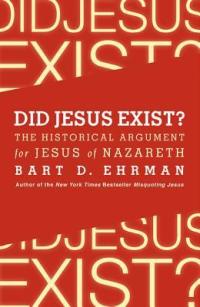
Bart D. Ehrman

Bart D. Ehrman

Efter ett två månader långt uppehåll i bloggandet, ska jag göra ett försök att återknyta till den stundom sorgliga debatten i kölvattnet av Bart Ehrmans bok ”Did Jesus Exist”. Redan innan Ehrman utkommit med sin bok sade jag att jag var nyfiken dock inte överentusiastisk och förutspådde att det nog ”blir samma gamla skåpmat som oftast blir fallet när någon ska argumentera för en historisk Jesus … att Paulus känner Jesu broder Jakob och att Josefus har en äkta kärna där han bekräftar Jesu existens, och så vidare” (Forged – Andra Thessalonikerbrevet). Det visade sig att jag rätt förutspådde detta, men min gissning att Ehrman ”inte kommer att lägga fram några argument utöver de redan kända och inga bevis utöver de som redan tidigare framförts” (Något om Bart Ehrmans ”Did Jesus Exist?”) var ingen högoddsare, så även om det nu visade sig vara en profetia som gick i uppfyllelse vill jag inte sträcka mig så långt som att påstå att det därmed skulle ge stöd för att Markusevangeliet är skrivet före år 70, med hänvisning till att om jag rätt profeterade om Ehrmans bok skulle Jesus med lätthet ha kunnat göra detsamma om templets ödeläggelse.

R. Joseph Hoffmann

R. Joseph Hoffmann

Ehrman har fortsatt sitt bloggande men gör detta i huvudsak på sin betalblogg (http://ehrmanblog.org/) där endast betalande medlemmar har tillträde och jag vet därför inte om han har lämnat debatten om Jesu existens bakom sig. I vilket fall deltar han inte längre öppet i debatten. Andra har dock tagit vid, men det har inte medför en höjning av debattnivån, snarare tvärtom. De mest aggressiva inläggen gentemot de som argumenterar för att Jesus inte har funnits har skett på R. Joseph Hoffmanns blogg The New Oxonian. Jag tänker inte hänvisa till något specifikt inlägg av Hoffmann eftersom jag inte finner speciellt mycket som är läsvärt. Ska jag vara ärlig har jag ibland svårt att ens förstå vad han vill ha sagt utöver de uppenbara smädelserna. Mothuggen har som regel kommit från Vridars blogg av i huvudsak Neil Godfrey. På samma blogg fortsätter Earl Doherty sitt punkt-för-punkt-bemötande av Ehrman, samlat här. Ehrman påtalar att det är svårt att bemöta ett verk som Dohertys Jesus: Neither God nor Man.

It is an 8oo-page book that is filled with so many unguarded and undocumented statements and claims, and so many misstatements of fact, that it would take a 2,400-page book to deal with all the problems.”

Dohertys bemötande av Ehrmans bok (hittills 26 inlägg) kommer kanske inte att bli 2400 sidor långt, men jag misstänker att det kommer att bli tre gånger så långt som Ehrmans egen bok. Ehrmans konstaterande är egentligen en plattityd eftersom ifall man vill bemöta en författares hela verk, krävs det som regel betydligt större utrymme för detta än vad verket i sig innehåller.

För att återgå till Joseph Hoffmanns blogg, så lät den brittiske nytestamentlige forskaren Maurice Casey där publicera ett inlägg, Mythicism: A Story of Bias, Incompetence and Falsehood, vilket väl kan sägas vara symptomatiskt för denna debatt. Argumenten består mestadels av oförskämdheter, auktoritetsargument och ibland också felaktigheter. Man undrar verkligen om detta är det bästa som kan åstadkommas om man vill framlägga starka argument till stöd för att Jesus har funnits? Den intresserade får själv ta del av Caseys argument. Neil Godfrey lät sarkastisk besvara Caseys inlägg i en serie där det första inlägget bär titeln Blogger Godfrey’s Reply (1) to Emeritus Professor Maurice Casey of The Jesus Process.

Kanske än mer utanför anständighetens gräns befinner sig Caseys forskarassistent Stephanie Louise Fisher i många av sina kommentarer. I inlägget AN EXHIBITION OF INCOMPETENCE: TRICKERY DICKERY BAYES håller hon sig väl ändå något till saken och Godfreys bemötande av hennes inlägg återfinns här och här.

George Albert Wells

George Albert Wells

Andra inlägg i debatten kommer från Kenneth Humphreys i The New Apologists: R. Joseph Hoffmann and friends on a rescue mission for the ”Jesus of history” och nestorn G. A. Wells’ recension av Did Jesus Exist? The Historical Argument for Jesus of Nazareth i Free Inquiry June / July 2012 Volume 32, Number 4, varur utdrag finns att läsa på Hermann Deterings webbplats här; samt Deterings eget bemötande av Ehrman Prof. ”Errorman” und die nichtchristlichen Jesuszeugnisse.

Även Robert Eisenman, mest känd för sin insats för att offentliggöra Dödahavsrullarna och för att hävda att Jesusrörelsens galjonsfigurer återfinns i denna litteratur, låter i en intervju gjord för Jesus Mysteries diskussionsgrupp uttrycka sin gillande i kampen för en större frihet inom den nytestamentliga forskningen och för ifrågasättandet av det gällande paradigmet.

Robert Eisenman

Robert Eisenman

”Thank you for the opportunity of contributing to and participating in your web discussions. Keep up the good work, as they say, and don’t allow yourselves to be defeated or discouraged by any hostile ‘academicians’ or so-called ‘scholars’. These, in the end, will always be the hardest either to influence or bring over to the kind of thinking you represent since they have the most to lose by either acknowledging or entertaining it, largely because they would be seen as somewhat ridiculous by their peers if they were to deny the whole thrust of their previous academic work and training.

We must leave them like this, but should not expect any different from them or be discouraged in any way by them. You and your participants are the final judge of these things and you have sufficient information and data at your fingertips to make your own final, intelligent, and incisive judgments yourselves which will hopefully be full of insight.”

Thomas L. Thompson

Kanske ändå av störst intresse är den danske gammaltestamentlige forskaren Thomas L. Thompsons inträde i debatten. Ehrman refererar till Thompsons The Messiah Myth: The Near Eastern Roots of Jesus and David, och säger om honom att han:

… is trained in biblical studies, but he does not have degrees in New Testament or early Christianity. He is, instead, a Hebrew Bible scholar who teaches at the University of Copenhagen in Denmark. In his own field of expertise he is convinced that figures from the Hebrew Bible such as Abraham, Moses, and David never existed. He transfers these views to the New Testament and argues that Jesus too did not exist but was invented by Christians who wanted to create a savior figure out of stories found in the Jewish scriptures.

och …

“… just as Old Testament notables such as Abraham, Moses, and David were legendary, not historical figures, so too with Jesus, whose stories in the Gospels are not the result of oral traditions dating back to near his own time but are literary fictions invented by the Gospel writers and their predecessors.

I artikeln Is This Not the Carpenter’s Son? A Response to Bart Ehrman, ger Thompson sin syn på hur Ehrman behandlat honom i sin bok. Han skriver att Ehrman betecknar hans bok som ett anti-religiöst förnekande av en historisk Jesus och att han tillskriver Thompsons bok argument och principer som Thompson aldrig har framfört, inklusive att Jesus inte skulle ha funnits. Hans bok handlar inte om huruvida Jesus har funnits eller ej, utan om analyser av vissa tematiska ämnen och motiv i en viss myt [Messiasmyten] som är minst två tusen år gammal. I denna analys ingick också en studie om de synoptiska evangeliernas teologiska upprepning att samariska och judiska skrifter har sina rötter i en allegorisk tolkning av framför allt främreorientaliska litterära teman, varav de flesta är knutna till den gamla konungaideologin. Thompson hävdar att Ehrman högtravande ignorerar hans analys av detta problem. Ehrman hävdar (enligt Thompson) att Thompson är okvalificerad att bedöma frågor om historicitet, eftersom han inte är nytestamentlig forskare och trots att han vigt fyrtio år av sitt liv åt just sådana studier. Thompson hävdar att exakt likadana stereotypiska litterära uttryck förekommer i evangelierna som de han studerat gällande gammaltestamentliga gestalter.

“I can understand that Ehrman may have some disagreement with my analysis and my conclusions. My introduction takes up the notoriously stereotypical figure of Jesus as (mistaken) eschatological prophet, which Ehrman—himself reiterating Schweitzer—asserts as, somehow, obviously historical. His lack of reflection on ancient forms of allegory, such as that reflected by Qohelet’s—and indeed Philo’s—principle that—in their world of theologically driven literature—there is little new under the sun, certainly provides adequate grounds for considerable disagreement, which I welcome. It is puzzling, however, that he seems sincerely unaware of the Old Testament and ancient Near Eastern thematic elements which are comparable to those of the Gospels: pivotal motifs such as “the one chosen by god,” the “inaugural announcement of the divine kingdom,” and “the good news” of that kingdom’s saving reversals, which offer a utopian hope to the poor and oppressed, the widow and the orphan. He even seems to ignore the stereotypical implications of the royal figure of a conquering messiah—which historical kings have indeed used in their “biographies.” Such an ancient theme as “life’s victory over death” gets its first treatment in the Gospels in a reiteration of the stories of Elisha.”

Thompson påpekar att dylika teman knappast kan utgöra historiska bevis för någon gestalt i antiken, det har alltid utgjort annat material än historiskt. Och Thompson undrar varför Ehrman har ”skrivit en sådan smädeskrift som Did Jesus Exist? Och när han beslutade sig för att skriva den, varför tog han inte titeln på allvar och försökte ge ett trovärdigt argument till varför han är övertygad om att han gjorde det?”

“I think a less polemically minded Bart Ehrman would recognize that this project on reiterated narrative, based in an analysis of comparative literature, can only be furthered by one who is familiar with Old Testament and ancient Near Eastern literature. Nevertheless, his crude dismissal of the relevance of inter-disciplinary perspectives undermines my confidence that he understands the problems related to the historicity of a literary figure, except from a historicist—even fundamentalist—perspective.“

Thompson säger sig vara irriterad och att denna irritation har framkallats av Ehrmans feltolkning av hans verk. Å andra sidan publicerar han nu tillsammans med Tom Verenna ett samlingsverk som just ska behandla historicitetsfrågan gällande Jesus, vad vi kan och inte kan veta. Richard Carrier recenserar för övrigt boken i Is This Not the Carpenter? Enligt Thompson behandlar boken “the very issue of the historicity of the New Testament figure of Jesus, which Bart Ehrman so thoroughly has misunderstood.”

Jag låter Thomson själv sammanfatta:

“Ehrman has asserted that the present state of New Testament scholarship is such that an established scholar should present his Life of Jesus, without considering whether this figure, in fact, lived as a historical person. The assumptions implied reflect a serious problem regarding the historical quality of scholarship in biblical studies—not least that which presents itself as self-evidently historical-critical. I wrote my monograph of 2005 in an effort to explore the continuity of a limited number of themes which were rooted in ancient Near Eastern royal ideology —an issue which is not only marginally related to questions of historicity, but one which also has much to say about the perception of history and historical method among modern scholars.”

James McGrath

I ett efterföljande inlägg påstår James McGrath att Thompson antingen håller med mytikerna, både vill äta och ha kakan kvar eller bortser från vad Ehrman skriver.

“In writing about this topic, Thompson had a wonderful opportunity to clarify his own position and distance himself from those internet crackpots sometimes referred to as ”mythicist” who comment on matters of history about which they are inadequately informed, engage in extremes of parallelomania which seem like a parody of the worst examples of scholarship from a bygone era, and in other ways do something that would be helpful in relation to this subject. That opportunity seems to me to have been squandered.”

Thompson svarar att han inte tar avstånd från ”mytiker” eftersom han inte kan se att denna term stämmer in på någon forskare som han känner till. Han påpekar också att de synoptiska evangelierna knappast kan användas för att bevisa att Jesus har funnits eftersom den bild som presenteras av Jesus är en stereotyp av en sort som förekommer hundratals år tidigare. Han säger sig inte ha bevisat att Jesus inte har funnits eller ens påstått detta. Däremot har han jämfört vår kunskap om Jesus med vår kunskap om gestalter som Homeros och i båda fallen är det svårt att urskilja en historisk gestalt, utan vi hamnar i berättelsernas tematiska drag.

Dr. McGrath återkommer och hävdar att ett av de huvudsakliga argumenten till att tro att Jesus har funnits …

” is the fact that those sources which narrate stories about him contain things which it is hard to imagine anyone concocting if their aim was to tell a story of someone who fit the expectations about precisely such a Davidic anointed one.”

Niels Peter Lemche

Niels Peter Lemche, en annan framstående representant för Köpenhamnsskolan, bemöter detta genom att berätta om en så kallad liberal imam som han mötte och som ingick i en grupp som skulle utröna om Koranen var ett verk av människor eller av Gud. Resultatet efter två års arbete blev – föga förvånande – att det var Guds verk eftersom ingen människa kunde komma på sådana berättelser. Lemche säger att McGraths argument endast visar att han inte kan föreställa sig detta.

“The time where we normally put Jesus was infested by a long series of Messiahs. Monty Pyton got it right in Life of Brian: The holy sandal! Acts also has a list of such messiah’s. Maybe Jesus was somebody who was selected by a certain Jewish messianic movement and made into their Messiah! (meaning that Jesus did not have the Christian party book number one).”

Slutligen en personlig undran över varför det inte går att föra en seriös debatt med forskare om Jesu existens utan att de blir alldeles ”sjövilda”. Jag undrar vad det är som gör dessa nytestamentliga forskare så upprörda. Tål de helt enkelt inte att deras föreställningar ifrågasätts? Är de oförmögna att behandla fakta förutsättningslöst? Varför kan de inte bara lägga fram argumenten som gör dem så övertygade om att de har rätt? Det är faktiskt mycket märkligt. Kan det vara så att de är så starkt knutna till den kristna föreställningen även i de relativt sällsynta fallen där nytestamentliga forskare är agnostiker och ateister i förhållande till kristendomen, att de inte kan bryta sig fria? Ty gällde det bara frågan om en vanlig dussinmänniskas existens kan jag näppeligen tänka mig att så många skulle tvingas ta till sådana överord och sådana nedlåtande omdömen om de som hyser en annan åsikt i frågan.

Roger Viklund, 2012-07-14

Ehrman versus Ehrman

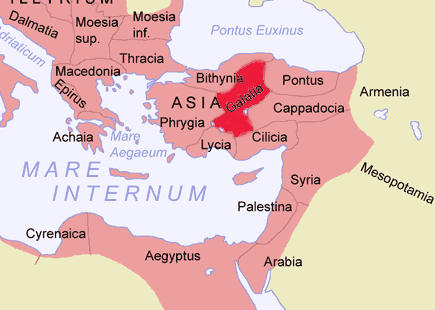
In Misquoting Jesus, Bart Ehrman deals among other things with “complications in knowing the ‘original text’” of the New Testament. He takes Paul’s letter to the Galatians as one example. He then presents a number of problems in knowing what Paul actually meant to say. First, “Galatia was not a single town with a single church; it was a region in Asia Minor (modern Turkey) in which Paul had established churches. When he writes to the Galatians, is he writing to one of the churches or to all of them?” Ehrman suggests that Paul wrote the letter for all of the churches. Ehrman continues:

“Suppose he made multiple copies. How did he do it? To begin with, it appears that this letter, like others by Paul, was not written by his hand but was dictated to a secretarial scribe. Evidence for this comes at the end of the letter, where Paul added a postscript in his own handwriting, so that the recipients would know that it was he who was responsible for the letter (a common technique for dictated letters in antiquity): ‘See with what large letters I am writing you with my own hand’ (Gal. 6:11). His handwriting, in other words, was larger and probably less professional in appearance than that of the scribe to whom he had dictated the letter.

“Now, if Paul dictated the letter, did he dictate it word for word? Or did he spell out the basic points and allow the scribe to fill in the rest? Both methods were commonly used by letter writers in antiquity. If the scribe filled in the rest, can we be assured that he filled it in exactly as Paul wanted? If not, do we actually have Paul’s words, or are they the words of some unknown scribe? But let’s suppose that Paul dictated the letter word for word. Is it possible that in some places the scribe wrote down the wrong words? Stranger things have happened. If so, then the autograph of the letter (i.e., the original) would already have a ‘mistake’ in it, so that all subsequent copies would not be of Paul’s words (in the places where his scribe got them wrong).

“Suppose, though, that the scribe got all the words 100 percent correct. If multiple copies of the letter went out, can we be sure that all the copies were also 100 percent correct? It is possible, at least, that even if they were all copied in Paul’s presence, a word or two here or there got changed in one or the other of the copies. If so, what if only one of the copies served as the copy from which all subsequent copies were made—then in the first century, into the second century and the third century, and so on? In that case, the oldest copy that provided the basis for all subsequent copies of the letter was not exactly what Paul wrote, or wanted to write.

“Once the copy is in circulation—that is, once it arrives at its destination in one of the towns of Galatia—it, of course, gets copied, and mistakes get made. Sometimes scribes might intentionally change the text; sometimes accidents happen. These mistake-ridden copies get copied; and the mistake-ridden copies of the copies get copied; and so on, down the line. Somewhere in the midst of all this, the original copy (or each of the original copies) ends up getting lost, or worn out, or destroyed. At some point, it is no longer possible to compare a copy with the original to make sure it is ‘correct,’ even if someone has the bright idea of doing so.

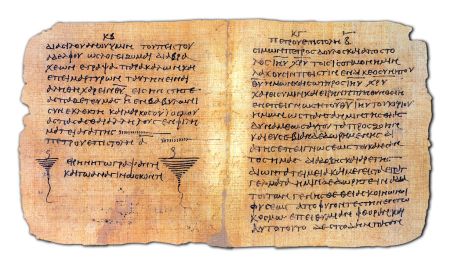
“What survives today, then, is not the original copy of the letter, nor one of the first copies that Paul himself had made, nor any of the copies that were produced in any of the towns of Galatia to which the letter was sent, nor any of the copies of those copies. The first reasonably complete copy we have of Galatians (this manuscript is fragmentary; i.e., it has a number of missing parts) is a papyrus called P 46 (since it was the forty-sixth New Testament papyrus to be catalogued), which dates to about 200 C.E. That’s approximately 150 years after Paul wrote the letter. It had been in circulation, being copied sometimes correctly and sometimes incorrectly, for fifteen decades before any copy was made that has survived down to the present day. We cannot reconstruct the copy from which P 46 was made. Was it an accurate copy? If so, how accurate? It surely had mistakes of some kind, as did the copy from which it was copied, and the copy from which that copy was copied, and so on.

“In short, it is a very complicated business talking about the ”original” text of Galatians. We don’t have it. The best we can do is get back to an early stage of its transmission, and simply hope that what we reconstruct about the copies made at that stage—based on the copies that happen to survive (in increasing numbers as we move into the Middle Ages)—reasonably reflects what Paul himself actually wrote, or at least what he intended to write when he dictated the letter.” (Bart D. Ehrman, Misquoting Jesus, pp. 58–60; my emphases added)

Let us apply this same reasoning to what Ehrman says in Did Jesus Exist about the famous passage of 1 Thessalonians 2:14–16. Ehrman argues that the passage was indeed written by Paul and the real reason for suspecting this is that the passage is not missing in any single manuscript:

“For one thing, what is the hard evidence that the words were not in the letter of 1 Thessalonians as Paul wrote it? There is none. We do not of course have the original of l Thessalonians; we have only later copies made by scribes. But in not a single one of these manuscripts is the line (let alone the paragraph) missing. Every surviving manuscript includes it. If the passage was added sometime after the fall of Jerusalem, say, near the end of the first Christian century or even in the second, when Christians started blaming the fall of Jerusalem on the fact that the Jews had killed Jesus, why is it that none of the manuscripts of l Thessalonians that were copied before the insertion was made left any trace on the manuscript record? Why were the older copies not copied at all? I think there needs to be better evidence of a scribal insertion before we are certain that it happened. And recall, we are not talking about the entire paragraph but only the last line.” (Bart D. Ehrman, Did Jesus Exist, pp. 123–124; my emphases added)

First we must assume that the same principle laid out for Paul’s letter to the Galatians also is true for his first letter to the Thessalonians. In Misquoting Jesus, Ehrman asks the obvious question; “what if only one of the copies served as the copy from which all subsequent copies were made—then in the first century, into the second century and the third century, and so on?” And what if someone added something to that copy which in turn was copied? As Ehrman says, “[s]ometimes scribes might intentionally change the text” and “[t]hese mistake-ridden copies get copied; and the mistake-ridden copies of the copies get copied; and so on, down the line.” In fact “[s]omewhere in the midst of all this, the original copy (or each of the original copies) ends up getting lost, or worn out, or destroyed.”

Here Ehrman seemingly proposes that it could be that “only one of the copies served as the copy from which all subsequent copies were made” and that the text of this copy might have been intentionally changed by the scribe so that we end up with a copy where the wording is changed and we “cannot reconstruct the copy from which” our preserved copy was made. We do not know if it was accurate. In fact Ehrman says in Misquoting Jesus that the “first reasonably complete copy we have of Galatians” is P 46 from c. 200 CE, although this manuscript is fragmentary. And this fragmentary manuscript does not include 1 Thessalonians 2:14–16.

So why would there then be such a big problem that “in not a single one of these manuscripts is the line (let alone the paragraph [of 1 Thessalonians 2:14–16]) missing”? Ehrman obviously thinks that it is possible that only one of the copies served as the copy from which all subsequent copies were made and that this continued from the first century into the third century, and so on. He also thinks that both unintentional and deliberate changes were made and at least the unintentional were made every time a manuscript was copied, while the original copies eventually gets destroyed. He also concludes that the “first reasonably complete copy we have of Galatians” is from c. 200 and one of the gaps of that manuscript covers 1 Thessalonians 2:3–5:5, so we do not even know if 1 Thessalonians 2:14–16 was part of that manuscript.

So why might only one copy of Paul’s letter to the Galatians has served as the copy from which all subsequent copies were made, but not just one copy of Paul’s letter to the Thessalonians? Did Ehrman mean that the alterations had to be made only to the first copy and if it was made say some 30 to 50 years later, there would be such an enormous amount of copies that some would survive and attest to different readings? He asks why the older copies were not copied. But if so, what is then the point of saying that scribes altered the text intentionally and this in several steps and that we “cannot  reconstruct the copy from which P 46 was made. It surely had mistakes of some kind, as did the copy from which it was copied, and the copy from which that copy was copied, and so on”? Why could not we simply compare it to all the correct readings which must have been preserved in all the other manuscripts copied from “the older copies”, as Ehrman in Did Jesus Exist? suggests they would have been?

Roger Viklund, May 12, 2012

Meningslösa exempel framförda som argument

Många forskare i både populärvetenskapliga och i mer vetenskapliga verk åberopar ofta så kallade belysande exempel, vilka de anser ger stöd åt deras teorier. Inte sällan är exemplen missvisande och ofta dessutom helt irrelevanta. Om man undersöker detta kommer man att finna många prov på vad jag väljer att kalla meningslösa exempel. Att man i mer populärvetenskapliga verk ofta tar till olika retoriska grepp för att åskådliggöra sin poäng är förståeligt, då sådana exempel säkerligen uppskattas av många läsare. Man kan då också lätt få för sig att man bättre förstår problemen och inte sällan (misstänker jag) låter man sig också förledas till att dra slutsatser som inte är giltiga.

För att bättre kunna förklara vad jag egentligen avser och för att urskilja sådana meningslösa exempel från relevanta exempel (ty sådana finns också), avser jag att påvisa två sådana meningslösa exempel ur Craig Evans’ ännu opublicerade artikel, vilken dock finns tillgänglig på Internet: Morton Smith and the Secret Gospel of Mark: Exploring the Grounds for Doubt. Orsaken till att jag väljer just Evans’ artikel är till viss del en slump och det går därför inte av detta att säga att hans artiklar generellt skulle utgöra varnande exempel. Jag har helt enkelt jobbat med den artikeln och har den därför i färskt minne.

Det finns mycket att säga om Evans’ artikel, men jag nöjer mig här med att belysa två exempel (och då faktiskt utelämna den parallell som Evans gör mellan Smiths fynd och Hunters roman The Mystery of Mar Saba). I stället tänker jag på ”Coleman-Norton’s amusing agraphon”. Evans berättar om en latinprofessor från Princeton University, Paul Coleman-Norton, som sade sig år 1943 ha hittat ett grekiskt textfragment med Jesusord, instucken mellan bladen i en gammal arabisk bok påträffad i en moské i Nordafrika. Coleman-Norton kopierade texten och lämnade därefter moskén för att senare återkomma med en kamera. Han fick dock aldrig möjlighet att fotografera sidorna utan reste hem efter kriget.

Coleman-Norton lät transkribera och översätta texten med litet fotnoter och försökte sedan få den publicerad i en vetenskaplig tidskrift – vilket dock visade sig inte vara så lätt, då man krävde att han kunde uppvisa textfragmentet eller åtminstone ett foto av det. Så småningom fick han sin artikel publicerad i Catholic Biblical Quarterly.

Evans menar att denna text var helt och hållet fabricerad av Coleman-Norton. Så kan säkert också vara fallet, men jag har inte undersökt den saken utöver det Evans skriver och har därför ingen säker uppfattning i frågan. Detta är också i princip ovidkommande för mitt resonemang. Enligt Evans ska Bruce Metzger i vilket fall ha hävdat att det var en förfalskning eftersom han mindes att när han var student under Coleman-Norton före andra världskriget, brukade denne skämtsamt berätta för sina studenter att Jesus försäkrade sina lärjungar att när de fördömda som saknar tänder kommer till helvetet, kommer de att få en tandprotes så att de ska kunna gråta och skära tänder. I det fragment som Coleman-Norton påstod sig ha funnit står det att Jesus varnar att de orättfärdiga ska kastas ut i mörkret där de skall gråta och skära tänder (Matt 25:30). När då en lärjunge frågar hur de tandlösa ska kunna skära sina tänder svarar Jesus: ”tänder kommer att tillhandahållas”.

Med detta vill Evans framhålla att även Morton Smith förfalskade Klemensbrevet. Han hävdar att parallellen med Coleman-Norton är att de båda ägde kännedom om vissa element av berättelsen i sina fynd innan fynden gjordes. Att Smith också skulle ha gjort detta är ytterst tveksamt och Evans’ argument för detta svaga. Men Evans drar också andra paralleller. Han till och med föreslår att de som inte har övertygats om att Klemensbrevet är en förfalskning (eller ett skämt) då också ska acceptera Coleman-Nortons upptäckt som ett äkta fynd. Orsaken säger han är att vi bara har Bruce Metzgers ord att gå på för antagandet att Coleman-Nortons fynd är en förfalskning, och trots detta antar i stort sett alla att det är en förfalskning. Varför ska vi då inte på samma sätt anta att Smith förfalskade sitt brev?

Svaret på denna fråga är enkel: Därför att Morton Smith inte är Paul Coleman-Norton. Att en person beter sig på ett visst sätt har ingen bäring på att en annan ska ha betett sig på samma sätt. Hur förledande och övertygande Evans’ parallell än må synas vara, finns helt enkelt inget samband mellan vad en person i en viss situation gjort och vad en annan person i en annan situation kan tänkas göra. Evans’ parallell må ha varit giltig om han ville övertyga oss om att folk, och även forskare, kan förfalska och också har förfalskat dokument. Men eftersom vi redan vet detta är inte ens den anledningen giltig.

Jag kan inte föreställa mig att det är många som är så övertygade att de utgår från att Morton Smith aldrig skulle ha kunnat göra något så gement som att förfalska en skrift. Självklart är det möjligt att han skulle ha önskat och även försökt göra något sådant, ty vi kan aldrig veta vad som rör sig i en annan människas inre. Men bara för att Coleman-Norton (troligen) har försökt bedra forskarvärlden genom att fabricera en text betyder det inte att Morton Smith har gjort detsamma. Faktum är att Coleman-Nortons handlande har absolut ingen påverkan på det Morton Smith har gjort eller inte gjort. Även om det verkligen vore så att Smith hade gett uttryck för liknande tankar som de som förekommer i Klemensbrevet innan han gjorde sin upptäckt, betyder Evans’ parallell med Coleman-Norton ingenting. Ty varje händelse måste bedömas på sina egna grunder.

Låt mig ta ett ytterligare exempel från Evans’ artikel – då i hans försök till försvar för Stephen Carlsons handskriftsanalys. I denna lilla exposé lämnar jag därhän sådana överdrifter hos Evans som att Stephen Carlson assisterades av en professionell handskriftsexpert (hon varken assisterade honom i analysen eller ägde expertis inom detta fält, då hon inte kunde grekiska), eller att Evans verkar tolka Carlsons, Anastasopoulous, och Tselikas’ respektive undersökningar som om de var gjorda av tre likvärdiga experter (där han även inkluderar Carlsons ”egen” expert så att det totalt blir fyra experter, med 3–1 till förfalskningsförespråkarna).

I stället tänkte jag skärskåda Evans’ resonemang till stöd för att Carlsons expertis i att bedöma Klemensbrevet inte ska avvisas allt för lättvindigt. Evans skriver att Hershel Shanks i BAR gjort just detta. Hur försvarar då Evans Carlson? Genom att hänvisa till hans metoder? Genom att styrka hans resonemang genom hänvisning till andra oberoende studier? Genom att klargöra hur hans metoder är giltiga? Ingalunda! I stället använder han ett ”meningslöst exempel” på andra framgångar som Carlson har haft i sitt arbete med dokument. Carlson har nämligen argumenterat för att en annan text, den så kallade “Archaic Mark” (Greek NT ms 2427 = Chicago ms 972), är en förfalskning. I en studie från år 2010 bekräftas tillsynes Carlsons resultat genom att handskriften i olika analyser visat sig vara från en senare tid.

Evans vill nu med hjälp av ”det faktum” att Carlson hade rätt i detta fall hävda att vi därför inte ska vara så snabba att avfärda hans analys av Klemensbrevet som varande också en förfalskning. Evans tycks anta att om man har rätt i det ena fallet finns skäl anta att man också har rätt i det andra. Men återigen, detta har inte med varandra att göra. Oavsett om Carlsons slutsatser var riktiga eller om han bara råkade ha tur i sin analys av “Archaic Mark” så att den överensstämde med det faktiska utfallet (det är ju faktiskt en 50-procentig chans att gissa rätt), så kan inte Carlsons eventuella förtjänster i ett fall sudda bort de misstag han begått vid sin analys av handstilen i Klemensbrevet. Det kan inte sudda bort det faktum att han analyserade tryckta reproduktioner som skapar optiska illusioner. Det kan inte sudda bort att han inte tog hänsyn till naturliga variationer. Det kan helt enkelt inte sudda bort de misstag han begått i sin analys av Klemensbrevet. Han kan ju ändå teoretiskt sett ha rätt i sin slutsats eftersom varenda en av oss kan ha det utan någon kännedom om sakförhållandena. En ren gissning ger 50 procents chans att man har rätt. Men vi talar här om de metoder Carlson använde för att dra sina slutsatser och dessa blir varken bättre eller sämre för att Carlson eventuellt/troligen hade rätt vad gäller äktheten av “Archaic Mark”. Evans’ försök att ”rädda” Carlsons analys genom att hänvisa till andra framgångar för Carlson är alltså ytterligare ett exempel på ett ”meningslöst exempel” framfört som argument till stöd för något som det inte stöder.

Med dessa två exempel vill jag uppmärksamma läsaren på detta fenomen och att argument som på ytan kan verka övertygande inte sällan bara är ”meningslösa exempel” utan betydelse för de argument som framförs.

Roger Viklund, 2012-05-07

Did Paul write that the Jews killed Jesus?

In 1 Thessalonians 2:14–16, there is an explicit statement that Jesus was killed by the Jews:

14 ὑμεῖς γὰρ μιμηταὶ ἐγενήθητε ἀδελφοί τῶν ἐκκλησιῶν τοῦ θεοῦ τῶν οὐσῶν ἐν τῇ Ἰουδαίᾳ ἐν Χριστῷ Ἰησοῦ ὅτι τὰ αὐτὰ ἐπάθετε καὶ ὑμεῖς ὑπὸ τῶν ἰδίων συμφυλετῶν καθὼς καὶ αὐτοὶ ὑπὸ τῶν Ἰουδαίων

14 Be imitators, brothers, of the churches of God that are in Judea in Christ Jesus, because you yourselves suffer the same things by your own fellow citizens as they do by the Jews (or the Judeans),

15 τῶν καὶ τὸν κύριον ἀποκτεινάντων Ἰησοῦν καὶ τοὺς προφήτας καὶ ἡμᾶς ἐκδιωξάντων καὶ θεῷ μὴ ἀρεσκόντων καὶ πᾶσιν ἀνθρώποις ἐναντίων

15 who killed both the Lord Jesus and the prophets, and persecuted us, and are not pleasing to God and to all people,

16 κωλυόντων ἡμᾶς τοῖς ἔθνεσιν λαλῆσαι ἵνα σωθῶσιν εἰς τὸ ἀναπληρῶσαι αὐτῶν τὰς ἁμαρτίας πάντοτε ἔφθασεν δὲ ἐπ’ αὐτοὺς ἡ ὀργὴ εἰς τέλος

16 who forbade us from speaking to the Gentiles that they might be saved, in order to fill up the full measure of their sins always. But wrath has come upon them at last.

In Did Jesus Exist Bart D. Ehrman, much to my surprise, defends the authenticity of this passage. (Above, for the sake of convenience, I am using the translation Ehrman provides in his book.) I have searched his other books to see whether he changed his mind or actually held this position earlier. In God’s Problem: How the Bible Fails to Answer Our Most Important Question–Why We Suffer from 2008, he discusses this passage on p. 148ff without giving a hint [as far as I can tell through the preview at Amazon] that it might not be genuine. So obviously he has for some time believed that this passage was indeed written by Paul.

In Did Jesus Exist Ehrman writes:

Paul thinks that Jesus was killed at the instigation of “the Jews.” This is indicated in a passage that is much disputed—in this instance, not just among mythicists.

Ehrman is accordingly (and naturally) fully aware of the fact that this passage is disputed, in part or in its entirety. Paula Fredriksen, Pheme Perkins, Daryl Schmidt, Burton Mack, Birger A. Pearson, Wayne Meeks, Helmut Koester, S. G. F. Brandon, Paul W. Schmiedel, Richard Carrier, Raymond Brown and many more have suggested that the passage was in part or in its entirety not written by Paul.

After quoting 1 Thess 2:14–16, Ehrman refers to the last sentence where the wrath (of God) is said to have come upon the Jews at last:

It is this last sentence that has caused interpreters problems. What could Paul mean that the wrath of God has finally come upon the Jews (or Judeans)? That would seem to make sense if Paul were writing in the years after the destruction of the city of Jerusalem at the hands of the Romans, that is, after 70 CE. But it seems to make less sense when this letter was actually written, around 49 CE. For that reason a number of scholars have argued that this entire passage has been inserted into 1 Thessalonians and that Paul therefore did not write it. In this view some Christian scribe, copying the letter after the destruction of Jerusalem, added it.

But Ehrman objects to this:

I myself do not agree with this interpretation, for a number of reasons. To begin with, if the only part of the passage that seems truly odd on the pen of Paul is the last sentence, then it would make better sense simply to say that it is this sentence that was added by the hypothetical Christian scribe. There is no reason to doubt the entire passage, just the last few words.

Ehrman makes a conditional sentence by saying “if the only part of the passage that seems truly odd on the pen of Paul is the last sentence, then …”. But he never discusses what the options are if also other parts of the passage are odd. In fact, he begins by saying, “if”, and then simply assumes that to be the case. I will soon return to the other objections.

Ehrman continues:

But I do not doubt even these. For one thing, what is the hard evidence that the words were not in the letter of 1 Thessalonians as Paul wrote it? There is none. We do not of course have the original of l Thessalonians; we have only later copies made by scribes. But in not a single one of these manuscripts is the line (let alone the paragraph) missing. Every surviving manuscript includes it. If the passage was added sometime after the fall of Jerusalem, say, near the end of the first Christian century or even in the second, when Christians started blaming the fall of Jerusalem on the fact that the Jews had killed Jesus, why is it that none of the manuscripts of l Thessalonians that were copied before the insertion was made left any trace on the manuscript record? Why were the older copies not copied at all? I think there needs to be better evidence of a scribal insertion before we are certain that it happened. And recall, we are not talking about the entire paragraph but only the last line.

I find this reasoning to be strained, particularly since the one who is making it is Bart Ehrman. First of all, it is not “we” but Ehrman who is only talking about the last line. It is he who has quickly travelled from “if the only part … is the last sentence” to “only the last line”. Secondly, are we only to suspect forgeries in those cases where we actually have textual evidence that the text is forged? This would mean that all forgeries could in fact be detected, since they all would show up as textual variants. Thirdly, the oldest manuscript containing First Thessalonians is p46 from c. 200 CE, and this does not even include 1 Thess 2:14-16. In fact, as far as I can tell, 1 Thess 2:14–16 is not attested anywhere until Codex Sinaiticus in the fourth century and this might even be the only evidence from the fourth century of this passage. Even though it is not missing in any single manuscripts where the lines are preserved and though it of course could be quoted by some Church Father, there really are not many early witnesses to this passage.

In fact, we can think of this as a three-stage rocket. First we have those few instances where we can be fairly certain that a word, a line, a chapter or an entire book is forged. For instance the ending of Mark (16:9–20) and the story of the woman taken in adultery (John 8:1–11) has so much textual evidence that we “know” they were not originally in the Gospels of Mark and John respectively. Then we have those instances where we have ambiguous textual evidence, supporting different readings. They are (I suppose) more numerous and we can often guess the more probable reading. Finally we have those passages which have no or nearly no textual support for any other reading than the normative. In some of these cases the text looks really suspicious, but we have no way of knowing if an original reading has been altered. In fact, if the analogy with increasing number is valid, this group should include the majority of all alterations, although we have only a remote possibility of spotting most of them. If there are no obvious signs of forgery and no textual support for this, then we must assume that the text is genuine, although it might not be what the author actually wrote.

The problem here is what to do with quite obvious forgeries without any textual support? Are we to believe without textual evidence that the Jesus-saying in Matthew 16:18, that “you are Peter, and upon this rock I will build My church”, was actually written by the author of the Gospel of Matthew, although this looks like a perfect example of something added to support the Roman Church?

Ehrman himself thinks that Second Thessalonians is a forgery because the author of that letter holds views that are opposed those that Paul holds in First Thessalonians:

It is particularly interesting that the author of 2 Thessalonians indicates that he taught his converts all these things already, when he was with them (2:5). If that’s the case, then how can one explain 1 Thessalonians? The problem there is that people think the end is supposed to come any day now, based on what Paul told them. But according to 2 Thessalonians Paul never taught any such thing. He taught that a whole sequence of events had to transpire before the end came. Moreover, if that is what he taught them, as 2 Thessalonians insists, then it is passing strange that he never reminds them of this teaching in 1 Thessalonians, where they obviously think that they were taught something else. (Bart D. Ehrman, Forged: Writing in the Name of God–Why the Bible’s Authors Are Not Who We Think They Are, p. 107)

In his exposition of the Testimonium Flavianum, Ehrman on the other hand accepts (or at least postulates) that there originally was a different and peeled-off version of the Testimonium written by Josephus, although not in a single one of the preserved manuscripts is this reconstruction supported. To paraphrase Ehrman, what is the hard evidence for that version in Josephus? There is none. We do not of course have the original of the Antiquities of the Jews; we have only later copies made by scribes. But every surviving Greek manuscript includes the normative version of the Testimonium. If an original passage was altered sometime before Eusebius in the third century, why is it that none of the manuscripts of either Josephus or Eusebius has left any trace on the manuscript record? Why were the older copies not copied at all?

Then what are we to make of 1 Thess 2:14–16? Is it really that important that the text is present in every one of the later manuscripts? I do not think so; because there are solid indications that Paul could not have written this.

1)      First of all, the fact that the wrath of God is said to have finally come upon the Jews definitely looks like it is referring to some catastrophic event that befell the Jews in the past. The obvious catastrophe is the destruction of the Templein 70 CE and the banishment of the Jews. And since First Thessalonians is believed to have been written by Paul c. 50 CE, he cannot possibly have known about this. One can therefore assume that this was written by someone other than Paul at any time after 70 CE. Any attempts to link this to Claudius’ expulsion of Jews from Rome maybe in the late 40’s are vain, not least because this letter of Paul is written to the church members of Thessaloniki.

2)      Nowhere else is Paul writing that the wrath of God already has come or is coming. At other occasions he writes about God’s wrath as something that will come in the future. See for example, Romans 2:5, 3:5, 4:15, 5:9 and so on.

3)      The anti-Jewish tone where the Jews are enemies [Ehrman translates this as “not pleasing”, however ἐναντίος rather means “opposed”] of all mankind, is in glaring contrast to what Paul writes elsewhere. Paul is depicted here as really intransigent, while elsewhere he hopes that the Jews eventually will turn to Christ. One could say that Paul here is taking the opposite position of the one we encounter in Romans chapter 9 to 11. In Romans 11:25–28, Paul says that all the Jews will be saved: “And so all Israel will be saved, as it is written”. 1 Thess 2:14–16 reflects thus seemingly a later and more Hellenistic anti-Jewish view, compared to Paul’s more pro-Jewish view. This argument is quite the same as the one Ehrman advances in order to deem 2 Thessalonians as non-Pauline; and besides, this sentence is also found in verse 15, the part which Ehrman sees no reason to suspect that Paul did not write.

4)      The line that it was the Jews who “killed both the Lord Jesus and the prophets” also implies that Paul himself was not a Jew, which he obviously was and also said he was. In fact it was “the Jews who killed the Lord Jesus” and “they persecuted us”, and “they are not pleasing to God” and “they might be saved” and “wrath has come upon them”. In for instance Romans 11:1 Paul writes: “I am an Israelite myself, a descendant of Abraham, from the tribe of Benjamin.” (see also Rom 9:3–5, 1 Cor 9:20 and Gal 2:15). Even more, many members of the congregations to which Paul wrote were also Jews. (see for instance Rom 9:24, 10:12 and 1 Cor 12:13). Why would he say to them that the Jews were enemies of all mankind?

5)      And finally, only in this passage does Paul blame the Jews for the death of Jesus. For example in 1 Corinthians 2:8, he instead argues that Jesus was killed by lower spiritual beings (“the rulers [archontes] of this age”). It is also quite obvious in Romans chapter 11 that Paul does not know that the Jews killed Jesus. In 11:3 he cites the words of Elijah in 1 Kings, namely that the Jews in the past had killed God’s prophets. Paul probably wrote Romans several years after he wrote 1 Thessalonians. If Paul already several years earlier when he wrote 1 Thessalonians had known that the Jews had killed Jesus, it is almost inevitable that he would have said so in Romans chapter 11 when he claimed that they killed God’s prophets. But Paul does not even hint at that. This is an additional indication that he had never heard that the Jews would have killed Jesus, and therefore did not write in 1 Thessalonians that they did.

There are accordingly good reasons to suspect that not only the last sentence in 1 Thess 2:16 is an addition, but that the entirety of 1 Thess 2:14–16 was not written by Paul.

Neil Godfrey lists even more arguments from Birger Pearson in favour of the passage being a forgery. Apart from the reasons I already have given, he says …

a)      The passage begins a second “thanksgiving section” in the letter — something that appears to be an anomaly in Paul’s letters

b)     This same passage begins with a repetition of the same words and phrases (or identical ones) as had been already written in 1:13ff [sic! 2:13ff?].

c)      The passage intrudes into a ‘travelogue’ or ‘apostolic parousia’ section, something used by Paul to declare his travel plans and desire to be with the congregation, etc. — Paul nowhere else breaks up a ‘travelogue’ section

d)     The passage urges one church to follow another church as an example — while elsewhere (including in chapter one of this same letter) Paul commands his churches to follow him, or praises them for doing so, as he follows Christ

e)      This passage points to a period of persecution of Christians in Judea between 44 and 66 (when the Jewish War against Rome began) CE — there is no other evidence for such persecution

Nevertheless, Ehrman gives additional reason to why he believes the passage was indeed written by Paul. He says:

The other point to stress is that Paul did think the wrath of God was already manifesting itself in this world. A key passage is Romans 1:18–32, where Paul states unequivocally, “For the wrath of God is being revealed from heaven on all human ungodliness and unrighteousness, among those who by their unrighteousness suppress the truth.” When Paul says that God’s wrath is “being revealed,” he does not simply mean that it is there to be seen in some ethereal way. He means it is being manifested, powerfully made present. God’s wrath is even now being directed against all godless and unrighteous behavior. In this passage in Romans Paul is talking about God’s wrath now being directed against pagans who refuse to acknowledge him here at the end of time before Jesus returns from heaven. It would not be at all strange to think that he also thought that God’s wrath was being manifest against those Jewish people who also acted in such ungodly and unrighteous ways. And he has a full list of offenses against which God has responded.

This is though something quite different, as it here is said that he wrath of God is being revealed, while in 1 Thess 2:16 the wrath of God already has struck the Jews, meaning he already has “punished” them. This really suggests that the author had the destruction of the temple in mind. Further, we still have the statement in 2:15 that the Jews are opposed to (the enemies of) all people.

This is anyway how Ehrman summarises his discussion of the passage:

In short, I think that Paul originally wrote l Thessalonians 2:14-16. He certainly wrote everything up to verse 16. What this means, then, is that Paul believes that it was the Jews (or the Judeans) who were ultimately responsible for killing Jesus, a view shared by the writers of the Gospels as well, even though it does not sit well with those of us today who are outraged by the wicked use to which such views were put in the history of anti-Semitism.

Did you notice the shift from think to certainly to a fact?

a)      Ehrman thinks that Paul originally wrote l Thessalonians 2:14-16. He gives two reasons for this, there is no textual evidence to the contrary and Paul thought that the wrath of God was already manifesting itself in this world. To me these arguments are weak, but still they are valid arguments and obviously they have made him think that the passage was written by Paul.

b)     It is however a mystery how Ehrman can go from a personal opinion that l Thess 2:14-16 was written by Paul to a “certainty” that all of the verses 14 and 15 plus the beginning of verse 16 is genuine? He has not produced a shred of evidence that this would be the case, simply stated this as a fact of certainty.

c)      The next leap is yet even more breathtaking. From an unwarranted certainty he moves to make his case that “this means …that Paul believes that it was the Jews … who were ultimately responsible for killing Jesus”. To further emphasize this, he calls on the Gospels and thereby tries to prove that Paul was aware of the Gospel stories. But was not that what he was supposed to prove without bringing in the Gospels?

Ehrman thinks that Paul wrote all of l Thess 2:14-16 and from this, his own personal opinion, he draws the conclusion that this means that Paul believes that it was the Jews) who were ultimately responsible for killing Jesus. To this can also be added that Ehrman says that Paul believed that they were responsible for killing Jesus, not that they actually killed him. However, the author of l Thess 2:14-16 does not say that the Jews were responsible for killing Jesus, but that that they actually killed him themselves. Ehrman has made an interpretation of the passage based on the Gospel stories, and thereby managed to find a point of agreement with the Gospel story that is not found in the passage. He can thereby use these circumstances to claim that Paul was aware that the Jews killed Jesus (who then obviously must have been a real person); and that he was killed around the year 30 CE, as is confirmed by “the fact” that he knows the Gospel story (that says that Jesus was killed c. 30 CE) which depicts the Jews as “responsible for killing Jesus” although not actually doing the killing themselves.

However, if there is any passage in the entire New Testament, where there is no textual support but which nevertheless is likely to have been added afterwards by someone else than the original author, then that passage is l Thessalonians 2:14-16.

Roger Viklund, May 2, 2012

Den fortgående debatten kring Bart Ehrmans ”Did Jesus Exist”

Bart D. Ehrmans bok Did Jesus Exist har utmynnat i en rätt upphetsad debatt där sakinnehållet (tyvärr) har kommit något i skymundan, men vad var annat att vänta med tanke på Ehrmans anslag i artikeln Did Jesus Exist? i the Huffington Post. Denna artikel ledde till att Richard Carrier skrev ett skarp inlägg; Ehrman Trashtalks Mythicism riktat enbart mot artikeln och därefter ett kanske ännu skarpare inlägg mot boken Ehrman on Jesus: A Failure of Facts and Logic. I det inlägget sågar han boken fullständigt och säger att den är så full av fel att dessa kommer att allvarligt förleda och felinformera läsarna. Han skriver att Did Jesus Exist? felinformerar i större utsträckning än den informerar och att den “officially sucks”. Efter en lång genomgång och ett antal påpekanden om felaktiga påståenden, ologiska argument, självmotsägelser, oriktig framställning av motståndarnas argument och undanhållande av information, där Ehrman enligt Carrier inte förmått att korrekt behandla en enda fullständig teori framlagd av mytikerna, så anser han sig tvungen att kassera boken som inget mer än ett tragiskt mord på elektroner och träd.

Ehrman uppfattade detta inlägg som ett personligt angrepp på honom och hans integritet som forskare och skrev till sitt försvar Acharya S, Richard Carrier, and a Cocky Peter (Or: “A Cock and Bull Story”), i vilket han huvudsakligen tar upp detta med ”Petrus Penis”! Tyvärr har denna sak, en för frågan om Jesu historicitet helt ovidkommande detalj, kommit att dominera debatten. I sitt avfärdande av Acharya S., låter Ehrman i ett antal punkter räkna upp det han anser vara rena felaktigheter som han påträffat i hennes bok The Christ Conspiracy: The Greatest Story Ever Sold, varav en punkt lyder som följer:

“‘Peter’ is not only ‘the rock’ but also ‘the cock,’ or penis, as the word is used as slang to this day.” Here Acharya shows (her own?) hand drawing of a man with a rooster head but with a large erect penis instead of a nose, with this description: “Bronze sculpture hidden in the Vatican treasure of the Cock, symbol of St. Peter” (295). [There is no penis-nosed statue of Peter the cock in the Vatican or anywhere else except in books like this, which love to make things up.]”

Det tog inte lång tid för Acharya (här) att påvisa att hon alls inte hittat på (eller själv ritat) denna penisnästa byst, utan att hon i referenserna uppger varifrån hon hämtat uppgiften och att uppgiften med fotografier av bysten förekommer i många böcker. Carrier anklagade Ehrman för att vara slarvig i sin vetenskapliga noggrannhet genom att inte kontrollera uppgiften om huruvida det fanns en sådan byst eller inte, innan han fördömde henne. Ehrman försvarade sig med att han bara avsåg att bysten inte föreställde Petrus (något inte heller Carrier anser att den gör), inte att den inte fanns. Jag tänker inte fördjupa mig i denna icke-sak (även om det finns mycket att säga om den) mer än att Carrier och andra hävdar att Ehrman gör en efterhandskonstruktion, att den uppenbara läsningen av meningen ”There is no penis-nosed statue of Peter the cock in the Vatican or anywhere else” betyder att statyn inte skulle finnas, att Ehrmans undran om Acharya själv ritat bilden visar att han (trots bedyranden om motsatsen) inte ens kontrollerade hennes hänvisning till sin källa och att Ehrman i en radiointervju tydligt påstått att själva bysten är ett påhitt.

Detta hävdar Carrier i ett nytt bemötande av Ehrman i Ehrman’s Dubious Replies (Round One), vilket som titeln säger kommer att följas av del 2. I dessa inlägg bemöter Carrier två ytterligare inlägg av Ehrman, dels hans korta inlägg Response to Carrier, vari han i stort sett bara säger att han ska göra ett mer fullständigt bemötande av Carrier och sedan hänvisar till Joseph R. Hoffmans angrepp (jag hittar inget bättre ord) på Carrier i Mythtic Pizza and Cold-cocked Scholars (tydligt är att Hoffman och Carrier inte är såta vänner), dels hans Fuller Reply to Richard Carrier (vilket titeln till trots inte är speciellt fullständigt).

Jag har ingen avsikt att gå igenom argumenten, utan hänvisar den intresserade till att själv läsa och bilda sig en uppfattning. Samtidigt tar jag mig metodiskt och långsamt igenom Ehrmans bok och ska förhoppningsvis ta upp många fler detaljer i boken utan att behöva deltaga i ett korståg. I allt väsentligt (frånsett då tonen), håller jag dock med Carrier i hans sakkritik av boken, utan att jag för den skull anser boken på något sätt avvika från många andra verk om kristendomen. Skillnaden är väl att vissa förväntat sig mer av Ehrman (med tanke på andra böcker han har skrivit) och att de som berörs i boken anser sig vara felciterade, missuppfattade och i vissa fall förlöjligade.

Exempelvis Earl Doherty anser sig vara felaktigt behandlad och han skriver en längre inläggsserie tänkt att bemöta allt av värde i Ehrmans bok, och där hittills sex inlägg har publicerats på Vridars blogg (Earl Doherty’s Response to Bart Ehrman’s Did Jesus Exist?). Han är irriterad (angry: se FRDB) över ett antal påståenden som Ehrman gör om hans bok. Framför allt gäller det Ehrmans påstående att Doherty citerar professionella forskare till stöd för sina ideer utan att tala om att dessa forskare inte stöder hans tes om en alltigenom mytisk Jesus:

”He quotes professional scholars at length when their views prove useful for developing aspects of his argument, but he fails to point out that not a single one of these scholars agrees with his overarching thesis.” (DJE, s. 252)

För det första är ju detta inte sant eftersom Doherty många gånger säger att dessa forskare inte håller med om att Jesus var en myt. För det andra påtalar han tydligt i boken att det han framför är en extrem minoritetsposition vilken knappt delas av någon nytestamentlig forskare. Men här finns ett än större problem med Ehrmans påstående, ett som har med auktoriteter att göra – något Ehrman lägger stor vikt vid. Doherty ska alltså dra sig för att citera de forskare som tror att Jesus har funnits även om de i just den fråga Doherty argumenterar för håller med honom.

Inom all forskning söker man stöd för sina teorier genom att hänvisa till annan forskning som tillsynes stöder ens egna hypoteser. Detta betyder givetvis inte att den forskare man hänvisar till måste tycka likadant i det övergripande resonemanget eller dra likadana slutsatser som man själv gör. Man argumenterar för en viss sak och ger understöd för just den positionen genom att hänvisa till annan forskning som visar på just detta. Alla förväntas förstå att den man hänvisar till också hävdar detsamma som man själv argumenterar för i just det avseende som man söker stöd för, men inget mer utöver det. Jag kan exempelvis citera Feldman till stöd för en speciell aspekt gällande teorin att Testimonium Flavianum är en förfalskning, utan att hela tiden påpeka att Feldman trots detta anser att TF i någon utsträckning är skriven av Josefus. Min hänvisning till Feldman gäller bara just den del av mitt resonemang där jag hänvisar till honom, inget därutöver.

På något sätt innebär Ehrmans resonemang att hur man än vänder sig har man ändan bak. Ty om Doherty inte hade hänvisat till dessa källor skulle Ehrman ha avfärdat honom för att inte söka stöd i den nytestamentliga forskningen. Själv har jag fått kritik för att jag bygger på ”fel” källor och inte på de som tycker tvärtemot det jag tycker. Men varför skulle jag förlita mig på deras omdömen då jag inte delar deras uppfattning? Det är som att det gäller olika standarder. De som inte undervisar vid (de kristna) lärosätena är bara amatörer och de ska minsann inte ta åt sig äran av den forskning som producerats av forskare som gör det, genom att hänvisa till deras forskning.

Just denna omständighet tar Robert M. Price upp i en podcast-sändning (det som berör Ehrman är ca en halvtimme långt). Han tillkännager att han snart kommer att publicera ett bemötande av Ehrman, men går redan här i tal till starkt angrepp på Ehrmans metoder, vilka han dömer ut. Han påpekar att alla stora genombrott gjorts genom att man byggt på tidigare forskning men valt att tolka resultaten av denna forskning på ett nytt sätt. Han hänvisar exempelvis till Copernicus som givetvis fördömdes, men som bara omtolkade tidigare generationers arbete, den information och fakta som de arbetat fram, till något som stämde bättre överens med de iakttagelser som han och andra gjort. Varför skulle inte mytikerna på samma sätt som andra få bruka tidigare forskning till stöd för sina teorier utan att anklagas för att de man förlitar sig på inte håller med om det övergripande paradigmet?

Roger Viklund, 2012, 04-28

Suetonius most probably wrote Chrestus and not Christus

A new article has just been published: Jobjorn Boman, Inpulsore Cherestro? Suetonius’ Divus Claudius 25.4 in Sources and Manuscripts, Liber Annuus 61 (2011), ISSN 0081-8933, Studium Biblicum Franciscanum, Jerusalem 2012, pp. 355-376. It is a study of the manuscripts containing the Suetonian phrase Iudaeos impulsore Chresto assidue tumultuantis Roma expulit – in the translation given in the article: From Rome he (Claudius) expelled the perpetually tumultuating Jews prompted by Chrestus.

Having right from the start in 2010 followed the process of (and hopefully also contributed to) this article’s coming into being; I have eagerly waited to be able to refer to the results. The article is quite dense, and to my satisfaction, filled with facts, without the unnecessary filling and euphemisms. The report is simply clear and precise.

The study is accordingly about the “famous Chrest-sentence, which has been connected to ancient Christianity – the one in the Lives of the Twelve Caesars by the Roman historian and biographer Gaius Suetonius Tranquillus (c. 70-after 130 CE).” As readers of this blog may know, many believe that this Chresto is a reference to Jesus. Some have even suggested that Suetonius actually wrote Christo (ablative of Christus), so in order to reasonably establish the most probable reading, this study is most welcome.

In 2011, a study of a few manuscripts of Suetonius regarding the reading of Suetonius’ Nero 16.2 was done, and this showed that the original reading probably was christiani. I summarized this in Swedish in Skrev Suetonius kristna eller krestna?

There are more than 200 handwritten manuscripts of De Vita Caesarum, i.e. the Lives of the Twelve Caesars “extant, and over half of them were written after 1375”. The oldest manuscript, Parisinus Lat. 6115 or Memmianus, is believed to be from c. 820 CE.

These manuscripts have been categorized into two distinct groups. To quote William Hardy Alexander in “Some Textual Criticism on the Eighth Book of the Vita Caesareum of Suetonius” (University of California Publications in Classical Philology, Vol. 2, No. 1, pp. 1-33 November 17, 1908):

“The scheme of relationship among the Mss. of the De Vita Caesarum is given by M. Preud’homme thus:

Ω.  Early ancestor of P, written in capitals, possibly of fifth century.

P.  Archetype of all the known Mss. of the De Vita Caesarum.

X. Archetype of the Mss. of the first group.

Z. Archetype of the Mss. of the second group.

x.  Archetype of B and x’.

x’. Archetype of a b c f.

E. Archetype of A and D. (The footnote says: “M. Preud ‘homme does not give E in his scheme, but I have ventured to introduce it on the strength of his remarks in T. E. 37 regarding the relationship of A and J”).

A. Codex Memmianus, Parisinus 6115, ninth century.

B. Codex Vaticanus Lipsii, No. 1904, eleventh century, containing only the first three Lives and a short portion of the Caligula.

C. Codex Wulfenbuttelanus or Gudianus 268, eleventh century.

D. Codex Parisinus 5804, fourteenth century.

a. Codex Mediceus 68, 7 (called by Roth, after Jac. Gronovius, Med. 3), eleventh century.

b. Codex Parisinus 5801, twelfth century.

c. Codex Mediceus 66, 39 (called by Both, after Jac. Gronovius, Med. 1), thirteenth century.

f. Codex Montepessulanus 117, thirteenth century.

α. Codex Londiniensis, Brit. Mus. 15 C III, twelfth century.

β. Codex Parisinus 6116, twelfth century.

γ. Codex Parisinus 5802, thirteenth century.

δ. Codex Mediceus 64, 8 (called by Both, after Jac. Gronovius, Med. 2), thirteenth century.

ε. Codex Suessionis 19, thirteenth century,

ζ. Codex Cantabrigensis, kk. 5, 24, thirteenth century.

η. Codex Sioneusis, twelfth century.

θ. Codex Dunelmensis, C III 18, twelfth century.

κ. Codex Sionensis, twelfth century.

λ. Codex Londiniensis, Brit. Mus. 15 C IV, thirteenth century.

The existing Mss. fall then into two groups, X and Z, of which the first is the more important upon the whole, since it contains four codices (A B C a) of greater antiquity than any in the second division, and also because the lines of descent are so much better defined in it than in Z”.

Boman has studied 41 “of the oldest and most trustworthy manuscripts from the 9th to the 13th century, belonging to both families”, i.e X and Z. In the 17 manuscripts of the X-family, the names were distributed as …

Chresto 12
Cresto 1
Cheresto 2
Cherestro 1
Cristo 1

In the 21 manuscripts of the Z-family, the names were distributed as …

Chresto 9
Cherestro 8
Chrestro 1
xpisto 1
xpo 1
Christo 1

There were also three unclassified manuscripts, and they all read Cherestro. Accordingly:

In total, a majority of c. 51 % (21 of 41) of all the collected manuscripts read Chresto. If the one MS reading Cresto is included, the Chresto group include c. 53.7 % (22 of 41) of the collected MSS. The second largest group is the c. 31.7 % (13 of 41) reading Cherestro. The MSS reading a variant of the title Christ (xpo, xpisto, Christo and Cristo) form a small group of c. 9.8 % (4 of 41). The hapaxes are Cresto, Chrestro and Cheresto (c. 2.4 % – one MS – each). A spelling with an e is used in 90.2 % (37 of 41) of the collected manuscripts.

It should also be noted, that the variants of “Christ” occur in late to even later manuscripts, and then mostly in the less reliable Z-group. The reading also seems to depend upon earlier Christian interpretations of Suetonius.

Many modern scholars seem to have been either ignorant of these variants, or to have believed in non-existent variants. For instance “Maximilian Ihm, Henri Ailloud and John Carew Rolfe … note no other variant reading for Chresto than Orosius’ Christo (v.i.), which made Van Voorst believe that ‘the Latin text is sound’ and that no copyist ever ‘ventured to change Chresto to Christo’.” This we know is wrong. “Lævinus Torrentius (1525-1595), writes … that the reading Chresto indeed was evident only in one “of our manuscripts”, and that all the others had Cheresto, Cherestro or Chiresto”, and this is repeated again and again. Even in modern time, “Helga Botermann (1996) writes that apart from occasional (vereinzeltem) Christo and Chresto, the MSS give Cheresto, Cherestro and Chiresto.” That is the same Botermann that I have examined in five subsequent Swedish blog posts starting from here.

The manuscript which Boman has examined has the reading “Chresto, Cherestro, Cresto, Chrestro,Cheresto, Christo, xpo, xpisto, and Cristo. The readings Chestro, Chiresto and Chirestro, mentioned by Burman, Torrentius and Baumgarten-Crusius,” were  not found, and Chestro and Chirestro might be misspellings.

The truth is that Chresto is the dominant reading and Cheresto (which is not a proper name and might be just a misspelling that has been repeated through copying) covers most of the remaining instances. The few variants of Christ seem all to be simply alterations made in order to harmonize the text with incipient notion that Suetonius meant Christ – a notion that derive its origin already from Orosius.

Boman has also made a survey of all the important and at the same time early, Christian references to this passage in Suetonius. The most important of these are the one from the Christian theologian Paulus Orosius writing in the early fifth century. He then wrote:

Claudius Iudaeos inpulsore Christo adsidue tumultuantes Roma expulit.

In Orosius the name Chresto is replaced by Christo. This has led many to claim that Orosius has preserved the original reading, which then should have been Christo. But Boman goes against this idea by noticing that Orosius is not quoting Suetonius. He includes “the name Claudius, which Suetonius does not supply,” and Boman also refers to “other minor discrepancies between Suetonius and Orosius”. He says that in every one of the Orosian manuscript he has checked, the name is abbreviated into xpo or the like by using nomina sacra. This means that irrespective of the name being Chresto or Christo, it is just spelled CH-R-O. So we do not know if Orosius actually wrote Christus, as occasionally also the name Chrestus is abbreviated. Orosius for sure interpreted the Suetonian sentenced as if it referred to Christ, but this does not mean that it also read Christo. In fact, since he saw this as a reference to Christ, it is quite likely the later copyists of Orosius changed the quotation to read Christo (or more exactly X-P-O).

After this many, including Bede, quotes the Suetonian phrase as if it is about Christ. Nevertheless, most often they rely on Orosius’ interpretation of Suetonius and not on Suetonius himself:

“The Christian quotations of the Suetonian sentence in most cases share a common Christian source, and are of no value in determining the original spelling of the word after impulsore. Some seemingly deliberate omissions of the impulsore-part of Suetonius’ sentence, in the Christian corpus, could however indicate that the spelling was not the common Christo. Considering the obscurity of the Suetonian words, this is yet impossible to ascertain.”

So, the Christian sources cannot reasonably establish the text of Suetonius and the manuscripts of the Lives of the Twelve Caesars point to Chresto.

About 90 % of the collected manuscripts use an e, and the most common, earliest and most trustworthy spelling is indeed Chresto, which is an intelligible Latin word (the ablative of the proper name Chrestus). Chresto is also lectio difficilior compared to e.g. xpo. Accordingly, I, in agreement with the modern editions of De Vita Caesarum, conclude that the original Suetonian spelling of the word in fact was Chresto.

Roger Viklund, 2012-04-19

Agamemnon Tselikas’ Grammatical and Syntactic Comments Explored

An examination of Agamemnon Tselikas’

GRAMMATICAL AND SYNTACTIC COMMENTS


Agamemnon Tselikas, the Greek palaeographer contracted by Biblical Archaeology Review to examine the handwriting of Clement’s Letter to Theodoros, came to the conclusion that the letter is a forgery and “that the forger can not be [any] other person than Morton Smith or some other person under his orders.”

The reasons he gives for this are a combination of several arguments, of which I in this article will shed some light on one. Tselikas says in his summary that he …

“… noticed several grammatical errors in the text which we can divide into two categories: Those which are due to the ‘author’ and those which are due to the copyist. The first category concerns syntactic and meaning errors, which St. Clement would not be possible to make. The second category concerns the wrong dictation of some words. This phenomenon is frequent in the Byzantine and post Byzantine manuscripts and we can not give particular importance. However, if the scribe generally appears as an experienced and very careful, some of these mistakes show that he had not sufficient knowledge of the language.”

Tselikas accordingly divides his observations into two categories, those due to the author and those due to the copyist. The errors that might be due to the copyist are of minor importance and will not be dealt with in this survey, but the errors that might be due to the author (Clement) are of outmost importance. Tselikas claims that these are errors of syntax and grammar of a kind that Clement could not possibly make, and this study will investigate this issue.

The errors he thinks are due to the author are those he has listed under the numbers: 1, 2, 6, 7, 8, 9, 10, 11, 12, 13, 15, 20, 21, 22, 23, 24 and 28.

The errors he thinks are due to the copyist are those he has listed under the numbers: 3, 4, 5, 14, 15a, 16, 17, 18, 19, 25 and 27.

Number 26 is not included in any of these two lists, so I have just in case included it among errors due to the author, not knowing what Tselikas had in mind. There is no number 15a in Tselikas’ list, but a number 5a, which then probably is what Tselikas meant. This, anyway, is an error he thinks is due to the copyist.

I will primarily let scholars more knowledgeable in Greek than I am present their opinion. Since Morton Smith already made a thorough investigation of the language and presented this in his 1973 book Clement of Alexandria and a Secret Gospel of Mark, I will in most cases simply quote Smith.

Tselikas’ original remarks are set in red and bold text. They are from section B Grammatical and Syntactic Comments of his divided report. All the quotations from Smith follow upon the name Smith in bold and the page number(s) in Clement of Alexandria and a Secret Gospel of Mark from where the quotations are made. Smith’s numerals “refer to the Stählin edition of Clement by volume, page, and, if a third number is given, line.” (CA, 7)

Smith also included summaries and quotations from remarks made upon the text by other scholars consulted by him. The shortenings A.W. stands for Albert Wifstrand, Professor of Greek in Lund, Sweden and a Classical philologist; A.D.N. for Arthur Darby Nock, Professor of the History of Religion in Harvard, USA; B.E. for Benedict Einarson, Professor of Classics at the University of Chicago, USA; W.M.C. for William Musgrave Calder III, a Classical philologist from Columbia University in New York, USA; C.M. for Claude Mondésert, a Jesuit at Fourvière, Lyon, France and a specialist on Clement of Alexandria; C.F.D.M for Charles Francis Digby Moule, Lady Margaret’s Professor of Divinity at the University of Cambridge, U.K.; J.R. for John Reumann, Professor of the New Testament and Greek at the Lutheran Theological Seminary in Philadelphia, USA; P.B. for Pierre Benoit, theologian, exegete, Koine Greek translator and Director of the École Biblique in Jerusalem, and; C.H.R. for Colin H. Roberts, Lecturer in Classics and Papyrology at St John’s College at the University of Oxford, U.K.

- – - – - – - – - – - – - – - – - – - – - – - – - – - – - – - – - – - – - – - – - – - -

Tselikas writes:

1. v. 3-4. Οὗτοιἁμαρτιῶν: The only verb that we can suppose is εἰσὶ after the word γάρ. The absence of the verb here is not probationary.

Theodoros I.3-4 (my emphasis)

οὗτοι γὰρ οἱ προφητευθέντες ἀστέρες πλανῆται· οἱ ἀπὸ τῆς στενῆς τῶν ἐντολῶν ὁ δοῦ εἰς ἀπέρατον ἄβυσσον πλανώμενοι τῶν σαρκικῶν καὶ ἐνσωμάτων ἁμαρτιῶν·

Smith’s translation

For these are the “wandering stars” referred to in the prophecy, who wander from the narrow road of the commandments into a boundless abyss of the carnal and bodily sins.

Smith 8:

οὗτοι γὰρ.  II.195.10, οὗτοι, φασίν, εἰσὶν οἱ ἐκ γενετῆς εὐνοῦχοι (initial, as in the letter); II.178.14 οὗτοι γὰρ οἱ (initial).

Tselikas claims that the verb εἰσί (εἶμι: to be or to go) should be present. However, it is allowed in Greek, as well as in English, to omit the copula, and no other expert who has examined the text has remarked on this. Besides, a word like “εἰσὶ” could easily have been lost at any point in the transcription process, and does not need to be an error due to the author.

Smith also refers to Stählin II.178.14, where οὗτοι γὰρ οἱ occurs as initial. I do not have access to book II. Nevertheless, this seems to be from Stromateis 23, which reads:

Οὗτοι γὰρ οἱ ἀνταγωνισταὶ παχεῖς καὶ Ὀλυμπικοὶ σφηκῶν ὡς εἰπεῖν εἰσι δριμύτεροι, καὶ μάλιστα ἡ ἡδονή, οὐ μόνον μεθ´ ἡμέραν, ἀλλὰ καὶ νύκτωρ ἐν αὐτοῖς τοῖς ἐνυπνίοις μετὰ γοητείας δελεαστικῶς ἐπιβουλεύουσα καὶ δάκνουσα.

- – - – - – - – - – - – - – - – - – - – - – - – - – - – - – - – - – - – - – - – - – - -

2. v. 7. ἐλευθέρους: It must be nominative and not accusative case (ἐλεύθεροι) in order to agree with the participle καυχώμενοι, because the subject is the same person.

Theodoros I.6-7

καὶ καυχώμενοι ἐλευθέρους εἶναι· δοῦλοι γεγόνασιν ἀνδραποδώδων

Smith’s translation

and, boasting that they are free, they have become slaves of servile desires.

Smith 12:

ἐλευθέρους.  I.269.31, etc. [the accusative in this construction is frequent in Greek of this period; see Radermacher, 181 and Schmid, II.57; III.81; IV.83,620. ἑαυτούς may be supplied. A.D.N. Nevertheless, the construction in this letter is difficult. The parallels in Radermacher and Schmid have for the most part expressed subjects of the infinitives and are not so hard as this instance, where the nominative participle is immediately followed by the accusative. Similarly Thucydides, I.12.1 and IV.84.2, where predicate adjectives of the infinitive are put into the accusative, are easier than that of this letter. If the text here is right, I can understand it only as influenced by ἑαυτούς of the preceding line. A.W.] Cf. Apoc. 3.9: τῶν λεγόντων ἑαυτοὺς Ἰουδαίους εἶναι. In the preceding phrase, the writer had been thinking of Apoc. 2.24. [If the text is corrupt, a possible emendation would be ἐλευθεροῦσθαι. C.H.R.] The content of the letter here is paralleled in II.216.24, where gnostic libertines are described as λεγόντων ἐλευθερίαν τὴν ὑπὸ ἡδονῆς δουλείαν.

- – - – - – - – - – - – - – - – - – - – - – - – - – - – - – - – - – - – - – - – - – - -

6. v. 19. Μάρκος: pleonasm.

Theodoros I.18–19

τοῦ δὲ Πέτρου μαρτυρήσαντος· παρῆλθεν εἰς Ἀλεξάνδρειαν ὁ Μάρκος.

Smith’s translation

But when Peter died a martyr, Mark came over toAlexandria,

Tselikas must accordingly interpret “ὁ” as a relative pronoun, i.e. “ὁ Μάρκος” = “him Mark”. But why could this not simply be a “definite article”, i.e. “ὁ Μάρκος” = “the Mark”? Personal names in Greek are often given with a definite article, and ὁ is the singular and the masculine gender.  Daniel Wallace writes:

By the nature of the case, a proper name is definite without the article. If we read Παῦλος we do not think of translating it “a Paul.” Further, “the use of the art. w. personal names is varied; as a general rule the presence of the art. w. a personal name indicates that the pers. is known; the absence of the art. simply names him. . . . This rule, however, is subject to considerable modification. . . . “ … The difficulty with the article with proper names is twofold: (1) English usage does not correspond to it, and (2) we still cannot achieve “explanatory adequacy” with reference to the use of the article with proper names–that is we are unable to articulate clear and consistent principle as to why the article is used in a given instance. (For example, although sometimes it is due to anaphora, there are too many exceptions to make this a major principle.) What we can say, however, is that a proper name, with or without the article, is definitive. (Daniel Wallace’s Greek Grammar, Beyond the Basics, p. 245–246)

One of the reasons for using the definite article is stated in Funk’s Grammar at 711.4:

When the individualizing article determines a “subject” previously introduced into the discussion, its use is known as anaphoric (anaphora: reference back [to something under discussion]).

Accordingly, since Mark is the object of this passage and was introduced in I.15, the mention of Mark again in I.19 is a reference back to I.15 and should therefore have the definite article ὁ.

The definite article ὁ in front of the name Markos can be found in for instance Cassius Dio, Roman History, 72.5.3:

“ὅτι ὁ Μάρκος ἐλάλει πρός τινα τῇ Λατίνων φωνῇ,

“Once when Marcus was talking to someone in Latin”

and in Polybius, Universal History, 8.5:

ἓως ὁ Μάρκος δυσθετούμενος ἠναγκάσθη λάθρᾳ νυκτὸς ἒτι ποιήσασθαι τὴν παραγωγήν.

In the end Marcellus [Markos] was reduced in despair to bringing up his ships secretly under cover of darkness.

Even Eusebius of Caesarea uses the same definite article before Markos in Quaestiones evangelicae ad Marinum, 3, 00034:

τὸν δὲ τῆς τοῦ Σωτῆρος ἐπιφανείας, τὸν πρωῒ, ὃν ἔγραψεν ὁ Μάρκος εἰπὼν ὃ καὶ μετὰ διαστολῆς ἀναγνωστέον «ἀναστὰς δέ·»

… and that of the Saviour’s appearance, “early in the morning”, as written by Mark in words to be read as including a pause: “Having risen again”.

- – - – - – - – - – - – - – - – - – - – - – - – - – - – - – - – - – - – - – - – - – - -

7. v. 19. τα ταυτου: In τα the accent is missed and in ταυ the soft spirit, ie. He ought write τὰ ταὐτου. But the more probationary was to write τὰ ἑαυτοῦ.

Tselikas transcribes this as τα ταυτοῦ while Smith transcribes it as ταταυτου.

Theodoros I.19–20

καὶ ταταυτοῦ καὶ τὰ τοῦ Πέτρου ὑπομνήματα

Smith’s translation

bringing both his own notes and those of Peter,

Smith’s transcription is supported by the fact that two rows above on line 17 there is another instance of τατα (in the word χρησιμωτάτας) which looks the same and, although the two syllables of τα are written as separate units (χρησιμω τά τας), they obviously are part of the same word.

Smith 27:

καί . . . τ᾿ . . . καί.  [If one reads καὶ τά τ᾿ ατοῦ καὶ τὰ τοῦ Πέτρου, which I find preferable to τὰ ἑαυτοῦ, the καί . . . καί cannot mean ”both … and,” because a τέ cannot be combined with a καί in this manner, but the last καί must be connected with the τέ and the first καί is connected closely with κομίζων and stands for ”also.” He carried with himself also his own and Peter’s hypomnemata. A.W.]

Smith 28:

τὰ αὑτοῦ.  MS, ταταυτοῦ. [A.D.N. would read τά τ᾿ ατοῦ, on the supposition that the copyist did not understand the letters he found in his MS and so reproduced them en bloc.] This would suggest that he may have had before him a MS without accents and breathings. [But had that been the case, there would have been many more instances of omitted accents and of false divisions. I suspect that an ancestor had τὰ αὑτοῦ, which became ταυτοῦ. This can represent either τὰ αὑτοῦ or τοῦ αὐτοῦ. To show that it represented τὰ αὑτοῦ someone superscribed τὰ―hence ταταυτοῦ. καὶ τά τ᾿ ατοῦ καί is odd Greek; I should expect καὶ τὰ ατοῦ or (omitting καί) τά τε αὑτοῦ. B.E.] Stählin, I.XXXVIf, remarks on the frequency with which his manuscript used ατοῦ, etc., after articles, in place of the reflexive forms, and omitted the coronis in crasis. However, I think the error here must be given an explanation which will accord with the amazing correctness of the rest of the MS. I should suppose, therefore, that the writer found a folio of an uncial MS with few or no explanatory signs or word divisions. Therefore he studied it carefully, correcting the spelling, marking the divisions, adding accents, breathings, and the like. Along with his other changes he indicated by a superscribed τά, as B.E. suggests, that ΤΑΥΤΟΥ, which stood in his text, was to be understood as τὰ αὑτοῦ. Then he copied his corrected text into his book. He was pressed for time when he copied, and therefore made a number of minor mistakes, of which ταταυτοῦ was one.

There is accordingly no reason to presuppose that Clement made an error, as this just as easily could be an error made in the transcription.

- – - – - – - – - – - – - – - – - – - – - – - – - – - – - – - – - – - – - – - – - – - -

8. v. 24. ἐπιθεὶς: More probationary was to write προσθείς.

Theodore I.24 (my emphasis)

ἀλλὰ ταῖς προγεγραμμέναις πράξεσιν ἐπιθεὶς καὶ ἄλλας

Smith’s translation (my emphasis)

but to the stories already written he added yet others

Smith 39:

ἐπιθείς.  The same form is used, as here, of literary addition, with the dative and accusative, II.305.6. [However, in II.305.6 the ἐπιθείς occurs as part of the set phrase ἐπιθεῖναι τὸν κολοφῶνα. Apart from this phrase, ἐπιθεῖναί τι τοῖς προγεγραμμένοις is not very common in Clement’s time; the ordinary would be προσθεῖναι; but cf. Apoc. 22.18. A.W.]

And Revelation 22:18 reads in GNT Morph (my emphases):

μαρτυρῶ ἐγὼ παντὶ τῷ ἀκούοντι τοὺς λόγους τῆς προφητείας τοῦ βιβλίου τούτου ἐάν τις ἐπιθῇ ἐπ’ αὐτά ἐπιθήσει ὁ θεὸς ἐπ’ αὐτὸν τὰς πληγὰς τὰς γεγραμμένας ἐν τῷ βιβλίῳ τούτῳ

I warn everyone who hears the words of the prophecy of this book: If anyone adds anything to them, God will add to him the plagues described in this book. (NIV)

The word ἐπιθείς was then unusual, however not non-existent, since it was used in for instance the Book of Revelation. And we should be aware of the fact that there of course were many more words and expressions in use than what are attested in the preserved literature.

- – - – - – - – - – - – - – - – - – - – - – - – - – - – - – - – - – - – - – - – - – - -

9. v. 25. μυσταγωγήσειν: The dependance of the infinitive is unclear. If it depends from the verb προσεπήγαγε, then it must be a participle of the purpose and not infinitive, ie. μυσταγωγήσων Μάρκος, which agree to the sense of the phrase. If it depends from ἠπίστατο, then the subject is τὴν ἐξήγησιν, that is fully not probationary.

Theodoros I.24–26 (my emphases)

ἔτι προσεπήγαγε λόγιά τινα ὧν ἠπίστατο τὴν ἐξήγησιν μυσταγωγήσειν τὸυς ἀκροατὰς εἰς τὸ ἄδυτον τῆς ἐπτάκις κεκαλυμμένης ἀληθείας· οὕτως οὖν τὰς εἰς τὸ ἄδυτον τῆς ἐπτάκις κεκαλυμμένης ἀληθείας·

Smith’s translation: (my emphases)

moreover, brought in certain sayings of which he knew the interpretation would, as a mystagogue, lead the hearers into the innermost sanctuary of truth hidden by seven veils.

Smith 40:

μυσταγωγήσειν.  Also in III.161.18 where, as here, it refers to advanced instruction evidently effected by “exegesis” of “the Lord’s sayings.” Again, with the same sense, in II.320.7, where the mystery imagery is further developed with emphasis on the ᾄρρητα. Gnostic teachers are described as μυσταγωγοί in III.75.7. That Clement conceived of documents, especially the books of Scripture, and their interpretation as means of gnostic initiation is shown by Völker, 354ff. The method which the letter ascribes to Mark is that followed in the earliest period of rabbinic mystical speculation but already being abandoned in the time of Clement. Scholem writes, Gnosticism 31: “Tannaïtic tradition has it that a pupil who is found worthy to begin a study of mystical lore is given . . . only . . . ‘beginnings of chapters,’ whose function is only to point to the subject matter to be dealt with and leaves to the student the task of proving his understanding.” For this Scholem finds evidence in the Talmud Yerushalmi (hereinafter J.) Hagigah II.1(77a), and he concludes that texts giving full accounts of secret doctrine are post-Tannaïtic (third century or later) “even though much of the material itself may belong to the Tannaïtic period—which, of course, was, at the same time, the flowering season of Gnosticism.”

- – - – - – - – - – - – - – - – - – - – - – - – - – - – - – - – - – - – - – - – - – - -

10. v. 27. προπαρεσκεύασεν: It is not clear what is the object of the verb, his Gospel or himself before his death?

Theodoros I.26–27

οὕτως οὖν προπαρεσκεύασεν· οὐ φθονερῶς οὐδ’ ἀπροφυλάκτως

Smith’s translation

Thus, in sum, he prepared matters, neither grudgingly nor incautionously, in my opinion,

προπαρεσκεύασεν = prepare beforehand

Smith 41:

Προπαρεσκεύασεν.  II.422.17. Since LSJ s.v. reports the absolute use only of the middle forms of the verb, some object (“the text”? “matters”?) is probably to be understood here. [An object is similarly understood in Aristotle, Historia animalium 613a4. Cf. the use with ὅπως and a verb in the future, Plato, Gorgias 503a, 510d. A.D.N.]

- – - – - – - – - – - – - – - – - – - – - – - – - – - – - – - – - – - – - – - – - – - -

11. v. 30-32. Τῶν δὲ μιαρῶνὑπ᾽ αὐτῶν: The whole phrase has wrong syntax. It must be: Ὑπὸ δὲ τῶν μιαρῶν δαιμόνων ὄλεθρον τῷ τῶν ἀνθρώπων γένει πάντοτε μηχανώντων Καρποκράτης διδαχθείς.

Theodoros II.2–4

τῶν δὲ μιαρῶν δαιμόνων ὄλεθρον τῷ τῶν ἀνθρώπων γένει πάντοτε μηχανώντων· ὁ Καρποκράτης· ὑπ’ αὐτῶν διδαχθεὶς·

Smith’s translation

But since the foul demons are always devising destruction for the race of men, Carpocrates, instructed by them …

Tselikas accordingly wants the sentence to begin with “Ὑπὸ δὲ τῶν” instead of “τῶν δὲ” and the “ὑπ’ αὐτῶν” (by them) at the end to be removed.

Smith 45:

τῶν . . . μηχανώντων.  Initial genitive absolute indicating cause or prior condition (“since”), I.90.2f. Genitive absolutes are rare in Clement, but occasionally he uses a number in quick succession, e.g. II.212.29–213.4 (5 in 8 lines). They appear in his narrative style, as here, in III.188.3 and 12ff.

- – - – - – - – - – - – - – - – - – - – - – - – - – - – - – - – - – - – - – - – - – - -

12. v. 31. μηχανώντων: The grammatical form of active voice of the verb was never in use. Only once we find the verb μηχανῶ. The usual and probationary is μηχανωμένων.

Theodoros II.2–4

τῶν δὲ μιαρῶν δαιμόνων ὄλεθρον τῷ τῶν ἀνθρώπων γένει πάντοτε μηχανώντων· ὁ Καρποκράτης· ὑπ’ αὐτῶν διδαχθεὶς·

Smith’s translation

But since the foul demons are always devising destruction for the race of men, Carpocrates, instructed by them …

Smith 45–46:

μχηανώντων. [sic! μηχανώντων] Clement uses the middle in I.261.25, with dative (ἡμῖν understood) and accusative, as here. The active appears only in poetry, ἀτάσθαλα μηχανόωντας (Odyssey XVIII.143), which was echoed by Apollonius Rhodius, III.583, and of which the phrasing of the letter may be reminiscent. [Cf. the echo of Sophocles, below, II.14–15; the active of μηχανάω appears also in Sophocles, Inachus 21 (SP III.24) and Ajax 1037. On the latter passage Kamerbeek, Ajax, remarks, “It would seem that the rare active use here raises the verb above the all-too-human sphere . . . Note also the sinister associations of ambush and guile inherent in the verb μηχανᾶν.” The uses of the passive in Sophocles, Trachiniae 586 and elsewhere, also imply the existence of an active. W.M.C.] Clement frequently quoted and paraphrased Homer (IV.41f, four columns of references, including a quotation of Odyssey XVIII.130 in II.202.7), and his prose contains many words described in LSJ as primarily poetical and appearing in prose only in the work of “late” writers, that is writers of about Clement’s time. Besides these words, Clement uses in prose a considerable number of words cited in LSJ only from poetry. Of these latter, inspection of Stählin’s index from ααμ alone has yielded ἀεικίζω, 1.40.6; ἀθυρόγλωσσος, I.253.13, etc.; ἀλετρίβανος, I.155.20; and ἀμβρόσιος, I.197.1. Therefore this use of a poetical form is not atypical of Clements’ [sic!] style. [On this point I am particularly happy to record the agreement of C.M., who has had so much experience in edition and translation of Clement’s Greek.]

That the “grammatical form of active voice of the verb was never in use”, as Tselikas claims, must accordingly be seen as an exaggeration, as it was used in poetry. Furthermore, Clement often used words primarily poetical and in his prose a considerable number of words from poetry.

- – - – - – - – - – - – - – - – - – - – - – - – - – - – - – - – - – - – - – - – - – - -

13. v. 32. ἀπατηλοῖς: It must be corrected in ἀπατηλαῖς.

Theodoros II.4

ὑπ’ αὐτῶν διδαχθεὶς· καὶ ἀπατηλοῖς τέχναις χρησάμενος

Smith’s translation

instructed by them and using deceitful arts

Smith 47:

ἀπατηλοῖς τέχναις.  1.47.28, ἀπατηλὸν τέχνην, of art used to make images. Here too the adjective is of the second declension. In the letter it probably refers to magical practices [though A.D.N. thinks this reference not certain]. Clement uses it with this reference in 1.4.23, etc. The Carpocratians were widely accused of magical practices, Irenaeus (Harvey, 1.20.2 = Stieren 1.25.3); Hippolytus, Philosophumena VII.32; Epiphanius, Panarion XXVII.3; etc. Clement in his recognized works does not mention the accusation, but he had no occasion to do so.

Even if this is an error, there is no reason why it could not be an error that occurred in any of the subsequent transcriptions we must presume have been done from the original autograph. After all, the “dispute” is simply about one letter – an alpha or an omicron. I cannot possibly see why this need to be an “error” made by the author (Clement?)

- – - – - – - – - – - – - – - – - – - – - – - – - – - – - – - – - – - – - – - – - – - -

15. v. 34. ἀπόγραφον: This word with the meaning of a copy of book and not of the imitation of a text is very modern. The correct word must be ἀντίγραφον.

Theodoros II.5–6

οὕτω πρεσβύτερόν τινα τῆς ἐν Ἀλεξανδρείᾳ ἐκκλησίας κατεδούλωσεν ὥστε παρ’ αὐτοῦ ἐκόμισεν ἀπόγραφον τοῦ μυστικοῦ εὐαγγελίου·

Smith’s translation

… so enslaved a certain presbyter of the church in Alexandria that he got from him a copy of the secret Gospel

Smith 49:

ἀπόγραφον.  Not in Clement—who has, however, ἀπογράφεσθαι, meaning “to copy,” II.471.7. ἀπόγραφον meaning “copy” or “imitation” is used by Cicero, Ad Atticum XII.52 end (overlooked by Oksala, 158); ἀπόγραφος with the same meaning appears in Dionysius Hal., Usener-Raderm., Isaeus 11. In Diogenes Laertius, VI.84, ἀπόγραφος is taken by R. Hicks, in the Loeb translation, to mean “an imitator” [but more likely it means “a copy”—B.E.]. ἀπόγραφον is, in the preserved literature, a rare word; one can hardly believe that an imitator would have chosen it instead of the common ἀντίγραφον. [But the rarity of ἀπόγραφον is no argument against Clement’s possible use of it. A great many words which must have been common in ancient everyday usage are extremely rare in the preserved literature; see the numerous examples in the vocabulary of Krauss, Lehnwörter. A.D.N. Moreover, ἀπόγραφον (-ος) has a contemptuous sense not found in ἀντίγραφον. Thus in Cicero, Diogenes, and perhaps Dionysius ἀπόγραφον is dyslogistic. B.E. With this opinion, however, A.D.N. disagrees, contending thatCicero was only “apologizing whimsically for his philosophical works,” and that “when you speak of a man as being a copy, you imply inferiority; it is not so with a book.”] But the usage in this letter seems to support the opinion of B.E.

Accordingly, the word ἀπόγραφον was used in this time in this sense, and was in this context a more suitable option than the more common ἀντίγραφον, which lacks the contemptuous sense that ἀπόγραφον has. As Smith puts it: “one can hardly believe that an imitator would have chosen” ἀπόγραφον “instead of the common ἀντίγραφον” – unless, of course, one presupposes that the genius of Smith “the forger” allowed him to foresee this argument: he chose this awkward word, so that he could later defend its use in his published analysis of Secret Mark.

- – - – - – - – - – - – - – - – - – - – - – - – - – - – - – - – - – - – - – - – - – - -

20. v. 38-40: οὐδὲ προτείνουσιν … εὐαγγέλιον: The syntax is very dense. Προτείνουσιν as dative of person referent to εἰκτέον and ἀρνητέον suppose to be ἡμῖν. But the words προτείνουσιν αὐτοῖς have the position of dative referent to συγχωρητέον, and so an infitive is missing (for ex. λέγειν, διατείνεσθαι), from which must depend the phrase εἶναι τοῦ Μάρκου τὸ μυστικὸν εὐαγγέλιον. The sense is: It is not permited to those who suggest the lies to sustain that this is the secret gospel of Marc.

Theodoros II.10–12

τούτοις οὖν· καθὼς καὶ προείρηκα· οὐδέποτε εἰκτέον. οὐδὲ προτείνουσιν αὐτοῖς τὰ κατεψευσμένα συγχωρητέον τοῦ Μάρκου εἶναι τὸ μυστικὸν εὐαγγέλιον, ἀλλὰ καὶ μεθ’ ὅρκου ἀρνητέον.

Smith’s translation

“To them, therefore, as I said above, one must never give way; nor, when they put forward their falsifications, should one concede that the secret Gospel is by Mark, but should even deny it on oath.”

Scott G. Brown, on the other hand, prefers the translation (he has adapted from C. Mondésert’s translation given by Smith in CA, 52: “c’est là l’ ‘Evangile mystique’ de Marc”):

“To them, therefore, as I said above, one must never give way; nor, when they put forward their falsifications, should one concede that it is Mark’s mystic Gospel, but should even deny it on oath.” (Scott G. Brown, Mark’s Other Gospel: Rethinking Morton Smith’s Controversial Discovery, Wilfrid Laurier, 2005, p. xx)

Smith translates the sentence such that one should not concede that the Secret Gospel is written by Mark, while Brown translates is such that one should not concede that the Carpocratian Gospel is the same Gospel as the Mystic Gospel and written by Mark. Apart from the fact that Brown’s translation better corresponds with the inward sense of the letter, it also seems to better correspond with the Greek. Tselikas makes a similar interpretation as Brown by translating, that to those who suggest the lies (i.e. the Carpocratian mutilated version of the Gospel) should not be conceded [permitted] that this Gospel is by Mark.

Since this seem to be the best translation of the text and since the text then also makes perfect sense, I cannot see what it is that Tselikas reacts against and why Clement could not have written it.

- – - – - – - – - – - – - – - – - – - – - – - – - – - – - – - – - – - – - – - – - – - -

21. v. 41. ἀληθῆ: More correctly must be τἀληθῆ.

Theodoros II.12–13

οὐ γὰρ ἅπασι πάντα ἀληθῆ λεκτέον.

Smith’s translation

For, ”Not all true things are to be said to all men.”

Smith 54–55:

οὐ γάρ . . . λεκτέον.  This saying appeared in Philo, Questions . . . on Genesis IV.67, from which it was quoted by Procopius in his commentary on Genesis in the form οὐ πάντα ἀληθῆ λεκτέον ἅπασιν. Philo’s text, according to the preserved Armenian translation, went on to elaborate the principle and to teach (in IV.69) that “the wise man requires a versatile art from which he may profit in imitating those mockers who say one thing and do another in order to save whom they can” (my italics). This text strikingly parallels Paul’s claim in I Cor. 9.22, “I became all things to all men that I might by all means save some.” Since influence of Philo on Paul or of Paul on Philo is almost out of the question, it would seem likely that these two passages derive from a single source. The common-sense idea behind them had long been familiar in ancient philosophy. Diogenes Laertius, VIII.15, quotes from Aristoxenus, as a saying of certain Pythagoreans, μὴ εἶναι πρὸς πάντας πάντα ῥητά; for further examples see Reumann, Οἰκονομία. From philosophy and common sense alike it was taken over by early Christianity, where the example of the Apostles—and especially that of Paul—is often cited to justify the use of deception for good ends (Bauer, Rechtgläubigkeit, 41f; cf. above, on μέθ᾿ ὅρκου). Clement, as remarked above, shared this early Christian belief, which he summed up with the words τῷ μὴ πάντων εἶναι τν ἀλήθειαν (II.497.16) and understood as a principle even of divine revelation; cf. Sibylline Oracles XII(X).290f, τὸ δ᾿ οὐχ ἅμα πάντες ἴσασιν. οὐ γὰρ πάντων πάντα. Clement was deeply indebted to Philo (IV.47ff, 7 columns of citations—more than any other non-Christian author except Plato, who has 10). Both his similarity to Philo and his borrowing from him have resulted in considerable confusion in medieval MSS, where many passages now found only in Philo are attributed to Clement (III.LXXI–LXXXII). Among these are at least two from Questions . . . on Genesis (III.LXXIV, no. 511.15; LXXX, no. 339). Moreover, Clement himself appropriated without acknowledgment two considerable sections of Questions . . . on Genesis (II.474.1–20; 474.23–475.11). Therefore this saying may have come into the letter from Philo; cf. Reumann’s note on τἀληθῆ above, on I.10. On the other hand, it may have been a popular proverb (though it does not appear in the Corpus paroemiographorum). For further parallels to the idea see Nock, review of Goodenough V–VI, 527ff and, for the relation of Paul to Philo, Chadwick, St. Paul and Philo. On 297f Chadwick discusses the question of veracity; he has an additional parallel to the present passage (Cherubim 15).

And this is the passage to which Smith refers regarding Reumann’s note on τἀληθῆ in I.10.

Smith 14:

τἀληθῆ.  II.517.14; III.162.11, with crasis; II.465.14; III.66.5, without crasis; these irregularities in the use of crasis are probably scribal, but Stählin notes them also in the other MSS of Clement, IV.223 s.v. ἀλλά. Ἀληθῆ without the article, as a substantive, III.39.14, where Clement explains that the true Christian will sometimes lie, as might a doctor, for therapeutic purposes—a principle he justifies by appeal to the example of St. Paul (Acts 16.3; I Cor. 9.19f). [Cf. Philo, Questions . . . on Genesis IV.204. J.R.] It is characteristic of Clement to talk most of truth when recommending falsity.

- – - – - – - – - – - – - – - – - – - – - – - – - – - – - – - – - – - – - – - – - – - -

22. v. 44. ἔχοντος ἀρθήσεται: The passage must be completed as follows: τοῦ δὲ μὴ ἔχοντος καὶ ἔχει ἀρθήσεται.

Accordingly not:      τοῦ δὲ μὴ ἔχοντος ἀρθήσεται·

But instead:            τοῦ δὲ μὴ ἔχοντος καὶ ὃ ἔχει ἀρθήσεται.

Matt 25:29 reads:   τοῦ δὲ μὴ ἔχοντος καὶ ὃ ἔχει ἀρθήσεται ἀπ’ αὐτοῦ

This is accordingly a quote from the Gospel of Matthew, however shorter than what is found in the preserved gospel. Even if this would be an error (which, as Smith explains, it hardly can be said to be) one would not suspect a forger to make such a mistake as to make an incorrect quotation from a gospel.

Smith 57:

τοῦ . . . ἀρθήσεται.  Mt 25.29 ||Luk 19.26. The text is considerably shorter than that now found in the Gospels. This might be the result of deliberate abbreviation. However, Clement’s text of this verse probably differed in much the same way from that preserved. He quotes the first half twice (II.10.21 and III.41.7), both times in the form τῷ ἔχοντιπροστεθήσεται, which differs from the preserved forms of the first half as the text of the letter does from those of the second. Moreover, Clement’s text and that of the letter, put together, yield a simple, epigrammatic, rythmically [sic!] balanced version of the verse; the Matthaean and Lucan forms are unbalanced and cluttered. This does not prove the simple form the original form. [Simplicity is often the result of revision—A.D.N.] But it strongly suggests that the letter, since it contains the second half of the simple form, comes from Clement, in whose works we find the (parallel) first half of the simple form. (II.100.1ff and 263.25, which Stählin took as references to this passage, are probably from an extracanonical logion, combined in 263.25 with Mt. 6.33 || Lk. 12.31. The tradition of the saying is extremely complex; see Lindeskog, Logiastudien.)

- – - – - – - – - – - – - – - – - – - – - – - – - – - – - – - – - – - – - – - – - – - -

23. v. 44. μωρὸς ἐν σκότει πορευέσθω: Cf. ἄφρων ἐν σκότει πορεύεται (Ecclesiastes 2, 14, 2).

Theodoros II.16

καὶ ὁ μωρὸς ἐν σκότει πορευέσθω

Smith’s translation

and, ”Let the fool walk in darkness.”

Smith 58:

μωρός . . . πορευέσθω.  Ecclesiastes 2.14. Clement quotes Eccles. in II.37.3ff (1.16ff) and 8f (7.12), and in II.385.18ff (1.2), each time in texts almost identical with LXX. The text in the letter differs from LXX by substituting μωρός for ἄφρων (as did the above quotation from Prov. 26.5) and πορευέσθω for πορεύεται. The Hebrew text has holek (πορεύεται) and no variants are noted, so this latter difference may be interpretive. [It may also have been motivated at least in part by stylistic considerations. The imperative is more vigorous Greek. A writer with atticizing traits, like Clement, would prefer it. Similarly, De sublimitate IX.9 has γενέσθω φῶς . . . γενέσθω γῆ, where LXX has γενηθήτω. W.M.C.] Clement’s willingness to alter scriptual [sic!] quotations to suit his purposes is noted by Kutter, 22; Tollington, II.178; and others. [It may well have been subconscious, since he quoted from memory. A.D.N.] His use of an OT quotation, as here, to follow and clinch a NT one, is found in II.131.20–29 (the “NT” one is from Barnabas) ;135.23–31; 141.22–24; etc.

This is accordingly also a quotation, although not exactly the same as the text of Ecclesiastes 2.14 in Septuaginta.

- – - – - – - – - – - – - – - – - – - – - – - – - – - – - – - – - – - – - – - – - – - -

24. v. 47. ἠρωτημένα: More appropriate would be πρός τά ἠρωτημένα or τοῖς ἐρωτηθεῖσιν.

Theodoros II.19–20 with my addition of τῶν.

σοὶ τοίνυν οὐκ ὀκνήσω τὰ ἠρωτημένα ἀποκρίνασθαι· δι’ αὐτῶν [τῶν] τοῦ εὐαγγελίου λέξεων τὰ κατεψευσμένα ἐλέγχων

Smith’s translation

To you, therefore, I shall not hesitate to answer the questions you have asked, refuting the falsifications by the very words of the Gospel.

Smith 61:

τ ρωτημένα.  Clement uses the verb often (Stählin does not index it fully) and has the perfect middle passive in III.163.32. The perfect participle meaning, as here, “the questions which have been asked” is found in Plato, Laws 662e.

Smith 61:

<τῶν>.  Possibly omitted by the copyist through homoioteleuton; cf. II. 495.4. [A.W. thinks its insertion necessary, especially if one thinks the letter written by Clement. B.E. also suggests it. A.D.N. disagrees.]

Homeoteleuton (Greek: μοιοτέλευτον) means that the endings of (two) following words are repeated. In this case we could presume that the word αὐτῶν was followed by τῶν. The scribe then lost sight of the two repeating τῶνs and lost the second one. If the model was written in majuscules, than the text could have looked similar to this: ΑΠΟΚΡΙΝΑΣΘΑΙΔΙΑΥΤΩΝΤΩΝΤΟΥΕΥΑΓΓΕΛΙΟΥ. The scribe would then have missed the ΤΩΝΤΩΝ and only copied one ΤΩΝ in αὐτῶν, and left out the following τῶν.

- – - – - – - – - – - – - – - – - – - – - – - – - – - – - – - – - – - – - – - – - – - -

26. v. 61. ἐπέταξεν αὐτῷ Ἰησοῦς: An infinitive as object of ἐπέταξεν is missing, eg. ἐλθεῖν.

Theodoros III.6–7

καὶ μεθ’ ἡμέρας ἓξ ἐπέταξεν αὐτῷ ὁ Ἰησοῦς

Smith’s translation

And after six days Jesus told him what to do

If Tselikas intended this to be included among the things Clement could not have written, it should be noticed that this is supposed to be a quotation from Secret Mark. You cannot blame Clement for incorrect grammar in the things he quoted.

Smith 115:

ἐπέταξεν.  The verb: 4 in Mk., never in Mt., 4 in Lk. (1 Markan) + 1 in D. The person commanded is always in the dative. The form ἐπέταξεν occurs twice in Mk. and in the D variant to Lk. (8.55). ἐπέταξεν Ἰησοῦς αὐτοῖς is found in Dit. to Mk. 6.39 (where other witnesses lack Ἰησοῦς). These parallels demonstrate merely that the word was used normally by Mk. and Luk. The peculiarity here is the failure to specify the content of Jesus’ command; that is understood from the context, as in Mk. 1.27; Lk. 4.36; 8 25. [C.F.D.M., however, remarks that ἐπέταξεν αὐτῷ without direct object is odd, and the parallels adduced here are not quite similar for in all of them the content of the verb is perfectly clear. Moreover, why did the young man have to come to Jesus and stay with him, if Jesus was at his house?] The direct object may have been part of the secret oral teaching. It will be argued later that the young man came to Jesus to receive baptism conceived as a magically efficacious rite. If so, he had to come to Jesus becauses [sic!] Jesus had to prepare (purify? exorcise?) the area and the materials for the rite. The story suggests a large house, perhaps a villa. The young man was rich. Jesus and his followers may have been given a wing for themselves.

- – - – - – - – - – - – - – - – - – - – - – - – - – - – - – - – - – - – - – - – - – - -

28. v. 69. αὐτὸν: pleonasm

Theodoros III.14–15

καὶ ἦσαν ἐκεῖ ἡ ἀδελφὴ τοῦ νεανίσκου ὃν ἠγάπα αὐτὸν ὁ Ἰησοῦς

Smith’s translation with my insertion of “him”

And the sister of the youth whom Jesus loved [him] and his mother and Salome were there

This is also part of that which Clement quoted from the so-called Secret or Mystic Gospel of Mark, and accordingly the language in this passage is nothing Clement can be held responsible for. You cannot accuse Clement (or even a forger?) for using bad grammar in quotations from the Gospels. And this is a passage which Tselikas definitely includes among the mistakes he thinks Clement never could have made.

This pleonasm is also typical of “Mark”. The sentence verbatim reads “whom Jesus loved him”. This type of construction, with the interposed “him”, is foreign to standard Greek, but not only typical for Semitic languages, also in most cases necessary, and reveals that the original author of this text (Mark?) probably had a Semitic language as his native language.

Smith 120:

Further evidence that the longer text did not get its formula from Jn. appears in the pleonastic αὐτὸν, to which the uses in Jn. afford no parallel, and which a writer familiar with Greek would hardly have added; it is probably a Semitism—cf. ἧς . . . αὐτῆς in II.23, above, and the note there. [P.B. would distinguish the examples of this construction in the longer text and in Mt., where he thinks them Semitisms, from those in canonical Mk., where he thinks them emphatic, and would find in this distinction evidence that the letter’s Gospel is not by Mark.] The distinction seems to me so fine as to be subjective; it escaped Moule, Idiom-Book 176, and Blass-Debrunner-Funk no. 297.

The part in the letter which Smith refers to is this:

Theodoros II. 23–24

καὶ ἔρχονται εἰς βηθανίαν καὶ ἦν ἐκεῖ μία γυνὴ ἧς ὁ ἀδελφὸς αὐτῆς ἀπέθανεν

Smith’s translation with my insertion of “her”

And a certain woman whose [her] brother had died was there

Smith 100:

ἧς . . . αὐτῆς.  Redundant αὐτός following ὅς in the oblique cases is found twice in Mk., once in Mt., and twice in Lk. (one Markan), always in the genitive. ἧς . . . αὐτῆς appears only in Mk. 7.25. The same construction appears again in III.15, below, in the accusative. It is probably a Semitism rather than a sign of literary dependence; there are 10 instances, in all three oblique cases, in Apoc. (These figures do not include the peculiar readings of codex Bezae; Yoder’s concordance has not indicated the peculiar usages of αὐτός.) Both the instances in the longer text, and all those in canonical Mk., have in common a trait which Doudna was not able to find in the papyri, “namely, the fact that the redundant possessive pronoun follows its noun immediately” (Greek, 38).

- – - – - – - – - – - – - – - – - – - – - – - – - – - – - – - – - – - – - – - – - – - -

To sum it up, almost every example presented by Tselikas as proof that Clement could not have written this text has already been examined and explained by Smith. On top of that, Tselikas also presents examples which are quotations made by Clement and accordingly not anything that can be used as arguments against Clement as the author. Further, some errors in the text are obviously more easily explained as errors in the transcription process than errors made by the original author. As far as I can tell, not a single one of these passages can exclude Clement as the author of the letter.

Roger Viklund, April 15, 2012

« Äldre inlägg